
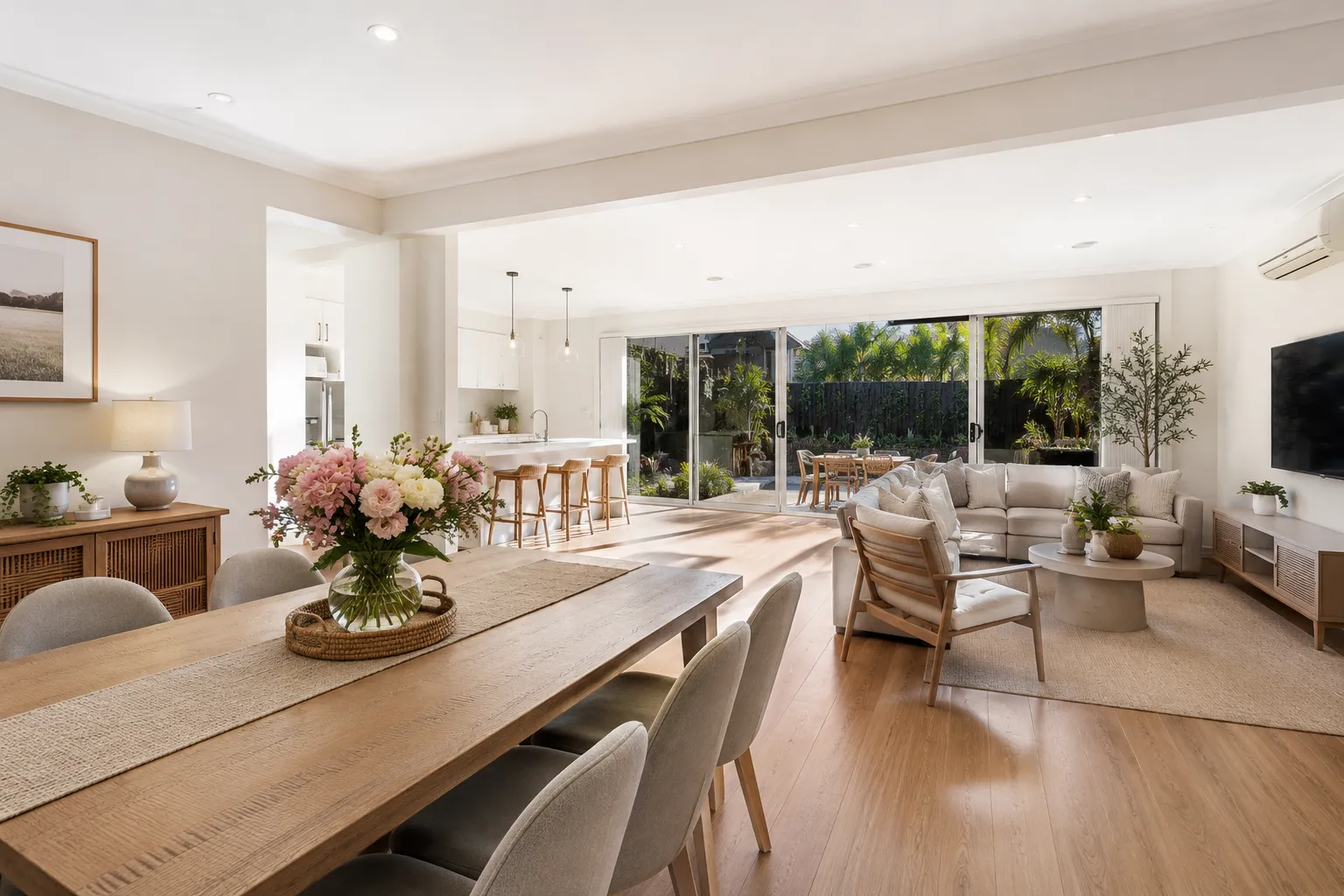
Staging your home for sale can add measurable value — or it can be an expensive decision that produces little or no return. The difference is rarely the staging itself. It is the sequence, the property type, and the buyer you are trying to reach.
Whether home staging works in your situation depends on four things: the condition of the property before staging begins, the type of property and the buyer profile it attracts, where the staging budget is spent relative to what buyers actually notice, and whether the sequence of preparation work is correct.
There is no universal answer. But there is a framework for working out which situation you are in — and that framework is what this page is about.
How Much Does Home Staging Cost — Fees, Prices and What Each Option Returns
Before deciding whether staging your home for sale is worth it, it helps to understand what each option actually costs — and how that cost compares to what the same budget might return if spent differently.
| Approach | Typical Cost | Best For | Risk |
|---|---|---|---|
| Sweat Equity | $200 – $800 materials | All property types — do this first | Labour time; not suitable without skills or tools |
| Soft Styling | $500 – $1,500 | Occupied homes with reasonable existing furniture | May not be enough for vacant properties |
| Partial Staging | $1,500 – $3,500 | Homes where specific pieces undermine presentation | Cost vs return depends heavily on buyer profile |
| Full Staging (Vacant) | $3,000 – $8,000+ | Vacant properties and character homes | Ongoing rental cost if campaign extends |
| Home staging fees, prices and rates vary by provider, property size and campaign length. Figures reflect typical Australian costs in 2026. | |||
Why the Sequence of Staging Your Home Matters More Than the Budget
Every presentation decision sits within one of four layers. The layers below must be right before the layer above can produce a return. Staging a property that has not completed the layers beneath it is the most common presentation mistake.
Most conversations about staging a house for sale start in the wrong place. They begin with "should I stage?" when the more important question is "have I done everything that needs to happen before staging becomes relevant?" How to prepare your house for sale correctly follows a consistent sequence across almost every property type.
Foundation — Address What Buyers Notice Before They Step Inside
The property has to be in a condition where presentation work can do its job. If there is obvious deferred maintenance — peeling paint, damaged fences, worn carpets, a front yard that communicates neglect — staging will not fix it. It will draw attention to the contrast between the styled interior and the problems the buyer noticed before they walked through the door.
A buyer who arrives at an inspection and sees a beaten-up exterior does not walk inside thinking "I wonder what the furniture looks like." They arrive already forming doubts. Staging those doubts away is not possible.
Sweat Equity — The Highest Return Presentation Work Available
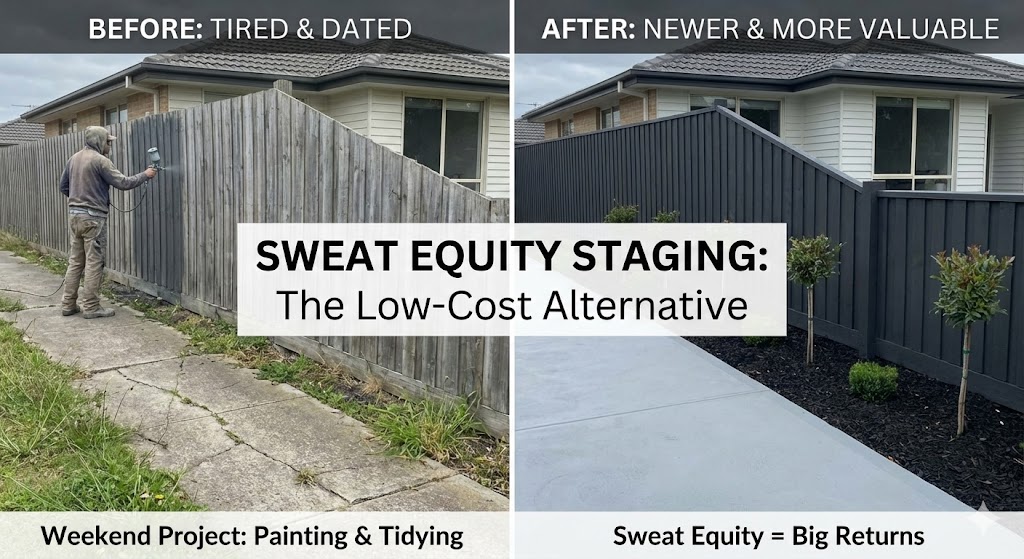
Once the foundation is right, the highest return presentation work is almost always low-cost and labour-intensive rather than expensive and outsourced. Painting fences, freshening interior walls, cleaning concrete, tidying outdoor areas — these changes cost relatively little and change how buyers read the property fundamentally.
I have personally spent a weekend with a spray gun painting fences and concrete paths and watched the property's perceived value shift noticeably. A uniform, freshly painted fence reads as a maintained property. A patchy, weathered fence reads as a maintenance item — and maintenance items create doubt at exactly the moment you need confidence.
The fence painting example is worth being specific about. Replacing a fence is expensive and the visual improvement relative to the cost is modest. Spray painting the same fence — even one with dents — unifies the colour and reduces the visual impact of wear. The dents are still there. But a buyer reading a uniform charcoal fence does not register the dents the way they register an inconsistent, patchy one. The colour change does the work.
Targeted Investment — Spend Where Buyers Are Mentally Subtracting
After sweat equity, the next layer is targeted spending on the specific elements buyers notice and deduct from. This is not about renovating — it is about identifying the one or two things that will shift buyer perception disproportionately relative to cost. In most residential properties this means the kitchen and the outdoor area. The full detail is in the next section.
Staging — The Finishing Layer, Not the Starting Point
Only after the first three steps are complete does staging become a relevant question. And even then, the answer depends on the property type and the buyer profile — which the sections below address directly. Staging a property that has not completed the layers beneath it is not a shortcut. It is a misallocation of the presentation budget.
Andrew's Observation
The most common mistake I see with staging a home for sale is the sequence. Vendors spend money on furniture and styling before they have addressed the things buyers actually notice first — the fence, the paint, the first impression at the front gate. Staging does not fix those problems. It draws attention to the contrast between what has been invested inside and what has been neglected outside. Get the foundation right. Do the sweat equity work. Then ask whether staging is appropriate for your property and your buyer.
Andrew McKiggan — Owner & Principal, Gawler East Real Estate RLA 248695
The Kitchen and the Outdoors — Where Presentation Spend Consistently Returns More Than It Costs
In most residential sales, there are two areas where presentation work reliably changes what buyers are prepared to pay: the kitchen, which wins the emotional buyer, and the outdoor area, which wins the practical one.
Most purchasing decisions involve more than one person. One buyer is often leading emotionally — they feel whether the home is right. The other is evaluating practically — they are checking whether the property makes sense. A presentation strategy that wins one but not the other rarely produces the strongest outcome.
The Kitchen

You do not always need a full renovation to change how a kitchen reads to a buyer. If the layout works but the surfaces are dated, targeted investment in specific elements can modernise the whole space for a fraction of the cost of a full renovation. Spraying cupboard doors in a fresh colour, replacing handles, updating lighting, or replacing a worn benchtop can shift buyer perception significantly.
The Outdoors
While the kitchen creates emotional connection, the outdoor area tends to produce rational confidence. Buyers who love the kitchen but walk outside to an overgrown garden, a dirty patio, and a shed that looks like it hasn't been touched in years often revise their emotional response downward.
A tidy, low-maintenance outdoor space — mowed lawn, clean patio, organised shed, freshly mulched garden beds — removes objections from the practical buyer and reinforces the impression of care that the interior created.
Does Home Staging Work — and Does It Increase the Sale Price?
This is where the grey areas live. Does staging a home increase the sale price? Sometimes yes. Sometimes the same budget produces a better return elsewhere. Anyone who tells you staging always adds value or never adds value is simplifying a question that genuinely depends on several variables.
The Buyer Profile Determines Whether Staging Does Its Job
Staging works through psychological immersion. When a buyer is emotionally absorbed in how a space feels — the furniture, the light, the sense of how rooms connect — they stop auditing the property and start imagining themselves living in it. That emotional state produces stronger offers.
Whether that psychological mechanism activates depends entirely on the buyer. There are two fundamentally different buyer types — and staging works powerfully for one and almost not at all for the other.
The Emotional Buyer
Inspecting a character home, a distinctive property, or something they have been searching for specifically. Already predisposed to feel something. Staging amplifies that feeling and suppresses the instinct to audit defects.
They are buying the feeling of the home — and staging delivers exactly that.
● Staging likely to return its costThe Forensic Buyer
Has inspected eight similar homes that week. Comparing on features, price per square metre, and rental yield. Not looking to feel anything — they are evaluating.
Staging is designed to activate an emotional response. When the buyer is not in that state, staging rarely changes the outcome.
● Staging unlikely to return its costSpending $3,000–$6,000 on staging furniture for a mid-range investor property where the buyer pool is forensic rather than emotional is, in most cases, a poor allocation of the presentation budget. That same money spent on fresh paint, fence preparation, and outdoor tidying would almost certainly produce a better return.
The Property Type Matters as Much as the Buyer Profile
Staging most likely to return value
- Vacant properties where empty rooms reduce buyer imagination
- Character homes where emotional potential isn't obvious unfurnished
- Properties in upper price brackets with emotional buyer pools
- Distinctive homes where styling helps buyers see what living there feels like
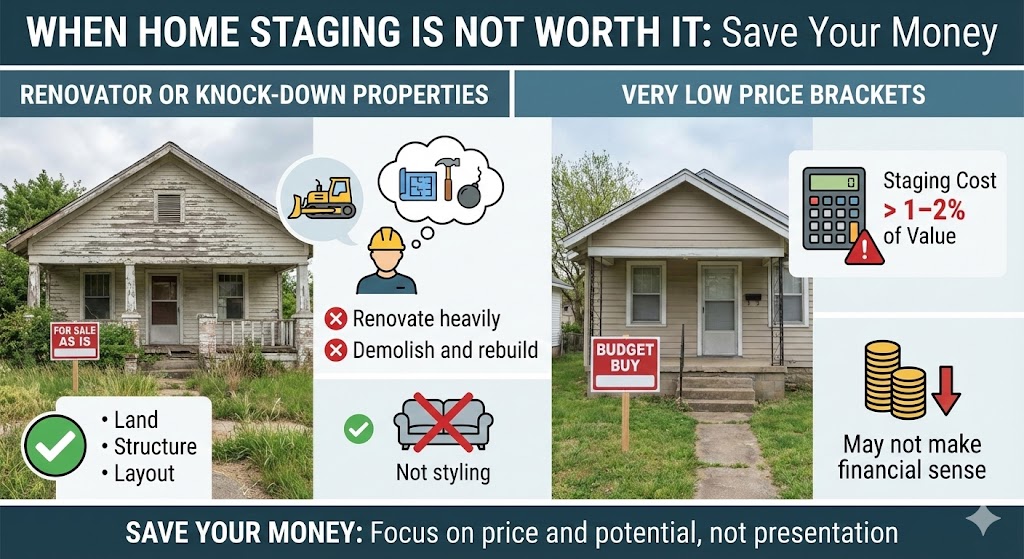
Staging unlikely to return its cost
- Mid-range investment properties with forensic comparison buyers
- Renovator's delight, knock-down rebuild or development sites
- Properties where foundation preparation hasn't been done
- Occupied homes where existing furniture is reasonable
The Cost, Labour, and Time Calculation
Whether staging is worth it also depends on what it actually costs in your specific situation — not what the industry average suggests.
If you have access to your own furniture, good taste, and the time to present the property well, soft styling will almost always outperform rented furniture on a return-per-dollar basis. The cost is your time. The return can be comparable to full staging in properties where the buyer profile is right.
If the property is vacant and you are comparing the cost of full staging against the risk of sitting on the market longer without it, the calculation changes. Extended days on market carry their own cost — in holding expenses, in the negotiating leverage that passes to buyers who know the property has been sitting, and in the price reduction that often follows.
There is no formula that applies universally. The calculation is specific to your property, your buyer profile, your timeline, and what the available budget would produce if spent on preparation basics instead.
The Three Types of Home Staging — Costs, Returns and Which One Applies to Your Situation
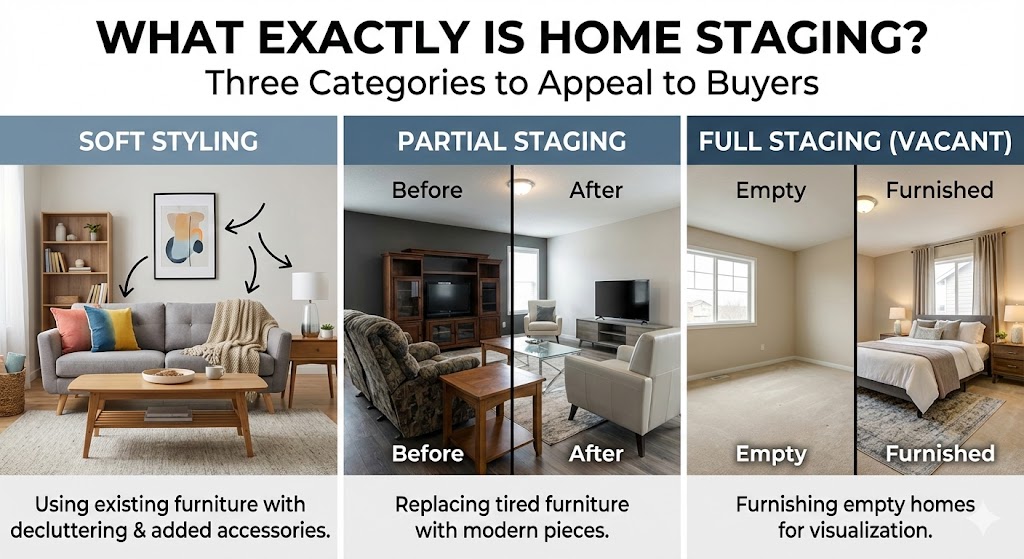
Soft Styling
$500 – $1,500Using existing furniture with careful decluttering, rearrangement, and the addition of accessories — cushions, throws, artwork, lamps — to modernise and refresh the space without hiring furniture.
Partial Staging
$1,500 – $3,500Replacing specific tired or oversized pieces with modern alternatives while leaving the rest of the existing furniture in place. Targeted rather than comprehensive.
Full Home Staging (Vacant Properties)
$3,000 – $8,000+Furnishing an empty property throughout for the duration of the campaign. The highest cost option and the highest risk if the campaign extends beyond expectations.
What Scent Does — and What It Doesn't

Buyers form an initial impression within the first thirty to sixty seconds of an inspection. That impression involves more than what they see — it includes what they smell.
The old advice — bake a loaf of bread before the inspection — is widely known and almost universally recognised by modern buyers as a staging trick. When it works at all, it tends to create a moment of warmth. When it fails, it signals to a savvy buyer that something is being concealed or compensated for. Most buyers today are experienced enough to notice when a home smells deliberately staged.
What actually works is simpler and more honest. A home that smells clean and neutral — fresh laundry, open windows, recently watered garden — creates the impression of care without creating the impression of effort. The goal is not to impress buyers with a scent. It is to ensure no smell is working against the inspection before it has started.
Practical approach — costs nothing
- Wash towels with mild detergent before each inspection — place one neatly in the bathroom and one in the laundry
- Open windows where possible at least 30 minutes before buyers arrive
- Water the garden the morning of the inspection
- Avoid artificial room sprays or candles — experienced buyers notice immediately
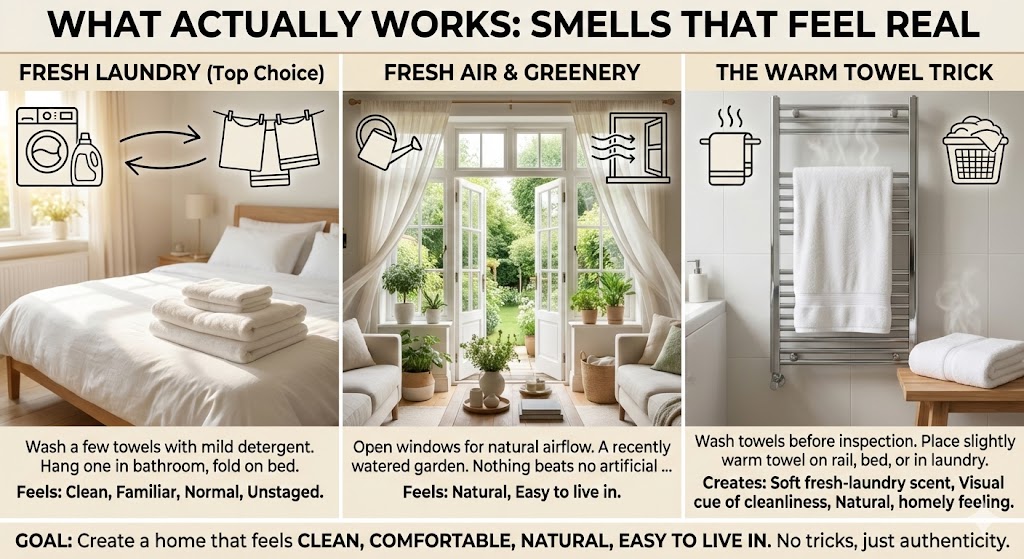
These things cost nothing and they work because they are authentic — they smell like a house that is lived in carefully, not a house that is trying to sell itself.
If this page helped you understand where presentation spend actually returns its cost — and where it doesn't — we'd genuinely appreciate a Google review. As an independent agency, we rely on recommendations from people who find our advice genuinely helpful. If you're short on time, even a simple star rating helps other homeowners discover practical, evidence-based property advice.
Leave a Google ReviewBefore You Spend Anything on Staging or Presentation — Read This First
The question "is it worth staging your home for sale?" is the wrong starting question. The right starting question is "what does this property need, in the right sequence, to give the buyer the best possible impression — and what will that actually cost relative to what it will return?"
That question does not have a generic answer. It has a specific answer for your property, your buyer profile, your price bracket, and your timeline.
What I can tell you from experience: the vendors who spend well on presentation are rarely the ones who spend the most. They are the ones who spend in the right sequence, on the right things, without wasting budget on the elements that buyers in their specific market either don't notice or don't value.
- Get the foundation right — address what buyers notice before anything else
- Do the sweat equity work first — paint, clean, tidy
- Spend targeted money where buyers are mentally subtracting
- Then — and only then — ask whether staging is the right finishing layer
Presentation and pricing are not separate decisions. A property that is staged beautifully but priced incorrectly will still sit on the market. Understanding how the two connect is the most useful thing you can know before either decision is made.
Property Pricing Strategy — how presentation decisions interact with your price positionStaging and presentation costs are part of your total selling costs. Knowing where they sit relative to commission, marketing, and legal fees helps you allocate the budget where it actually produces a return.
Real Estate Selling Costs — the full picture of what selling actually costsNot every renovation adds value before a sale. Understanding which improvements return more than they cost — and which don't — is as important as the staging decision itself.
Why Your Dream Renovation Might Be a Nightmare for Your Sale PricePresentation is one of nine decisions that determine your sale result. Understanding how it fits into the full sequence — before you list — is what separates a well-executed sale from one that costs you money you didn't need to spend.
Sell My House — the complete sequence of decisions every seller facesTiming your launch correctly affects how much competition your presentation can generate. A well-prepared property entering the wrong market conditions still faces headwinds — understanding when to list is part of the same decision.
Best Time to Sell a House — how market timing interacts with your preparation and price positionCommission and presentation costs both come out of your sale proceeds. Understanding what each agent charges — and what is actually included — is as important as the staging budget decision.
Real Estate Agent Fees — what you actually pay and what it covers
But poor presentation can quietly eliminate the opportunity to achieve it.
Presentation decisions are easier to get right when you know what buyers in your price bracket are actually responding to — and what your property genuinely needs relative to what it is competing against.
A free property appraisal from Gawler East Real Estate includes an honest assessment of where presentation will add value in your specific situation — and where the same money would be better spent elsewhere. No obligation. No inflated number designed to win the listing. Just the evidence, clearly explained.
Book a Free Property AppraisalOr call Andrew directly on 0493 539 067 · enquiries@gawlereastrealestate.au
Local Market Perspective
In the Gawler district and across the northern Adelaide corridor, the presentation decisions that consistently produce the strongest returns are the ones made in the right sequence — foundation, sweat equity, targeted investment, and then staging where appropriate.
The buyer profile in this market varies significantly by price bracket and property type. Entry-level and mid-range properties tend to attract forensic comparison buyers who are evaluating multiple options in the same week. Upper-range and character properties tend to attract emotional buyers who are looking for something specific and are more susceptible to the psychological effects of well-executed staging.
Home staging Adelaide and house staging Adelaide services are available across the northern corridor — but understanding whether staging is the right choice for your specific property and buyer profile is more valuable than the staging itself.
Gawler East Real Estate — RLA 248695. Serving Gawler, Willaston, Hewett, Evanston, Angle Vale, Munno Para, and the broader northern Adelaide corridor. Find out more about our approach at Gawler East Real Estate.