

Real Estate Agent Commission in Australia — Gawler & Northern Adelaide
What Does a Real Estate Agent
Actually Cost You to Sell?
Commission is the number most vendors focus on. But it is rarely the full picture. The total cost of selling includes administration fees, Form 1 preparation, marketing items that may or may not be included, and the legal searches that some agencies outsource at three times the in-house cost.
This page explains how commission works in Australia, what it should include, what questions to ask before you sign, and how the numbers actually compare across agency models in the Gawler district.
Before comparing any two agents on commission rate alone, it is worth understanding what the rate covers, what it does not, and what the total cost of selling looks like once every line item is included.
How Real Estate Agent Commission Works in Australia
What Is Real Estate Agent Commission — and What Does It Actually Cover?
Commission is the percentage of the final sale price that goes to the real estate agent for managing your sale from listing to settlement. It is calculated on the actual sale price — not the asking price — and is paid at settlement from the proceeds of the sale. In most cases, if the property does not sell, no commission is payable.
What commission covers — and what it does not — depends entirely on how the agency agreement is structured. This is where most vendors get caught.
- What commission should cover The agent's time, expertise, buyer management, negotiation, open home management, and coordination through to settlement. These are the core professional services you are paying for.
- What commission often does not cover Marketing costs (photography, portal listings, signboards), Form 1 preparation and legal searches, administration or establishment fees, ad copywriting, and floor plans. Many agencies charge these separately — sometimes at significant markups.
- When commission is paid At settlement, deducted from the sale proceeds. You do not pay commission upfront. If the property is withdrawn or does not sell under a standard agency agreement, commission is generally not payable — though you may still be liable for marketing costs incurred.
- Whether commission is negotiable Yes. In Australia, real estate commissions are not regulated and are negotiable before you sign the agency agreement. Once you sign, the rate is locked in — so the conversation needs to happen before the contract, not after.
One more thing worth understanding before you sign anything — the "no sale, no fee" principle that most agents promote applies to commission only. If your property does not sell and you withdraw it from the market, you will not pay the agent's commission. But you will almost certainly still be liable for the marketing costs that were incurred during the campaign — photography, portal listings, signboards, and any other advertising already placed.
This is where inflated or poorly itemised marketing packages become a risk. If an agent has loaded your campaign with expensive items that did not generate buyers — and the property has not sold — you carry those costs regardless. Before you sign, ask for a full itemised breakdown of every marketing cost, confirm what is included in the commission and what is not, and understand exactly what you will owe if the property is withdrawn.
Understanding the selling process, your rights, and what to ask before signing anything is the single most important thing a vendor can do before committing to any agent. The sections below explain exactly how those numbers compare — and what to ask before you commit to anything.
Commission Rates Across Australia
What's the Commission for a Real Estate Agent in Australia?
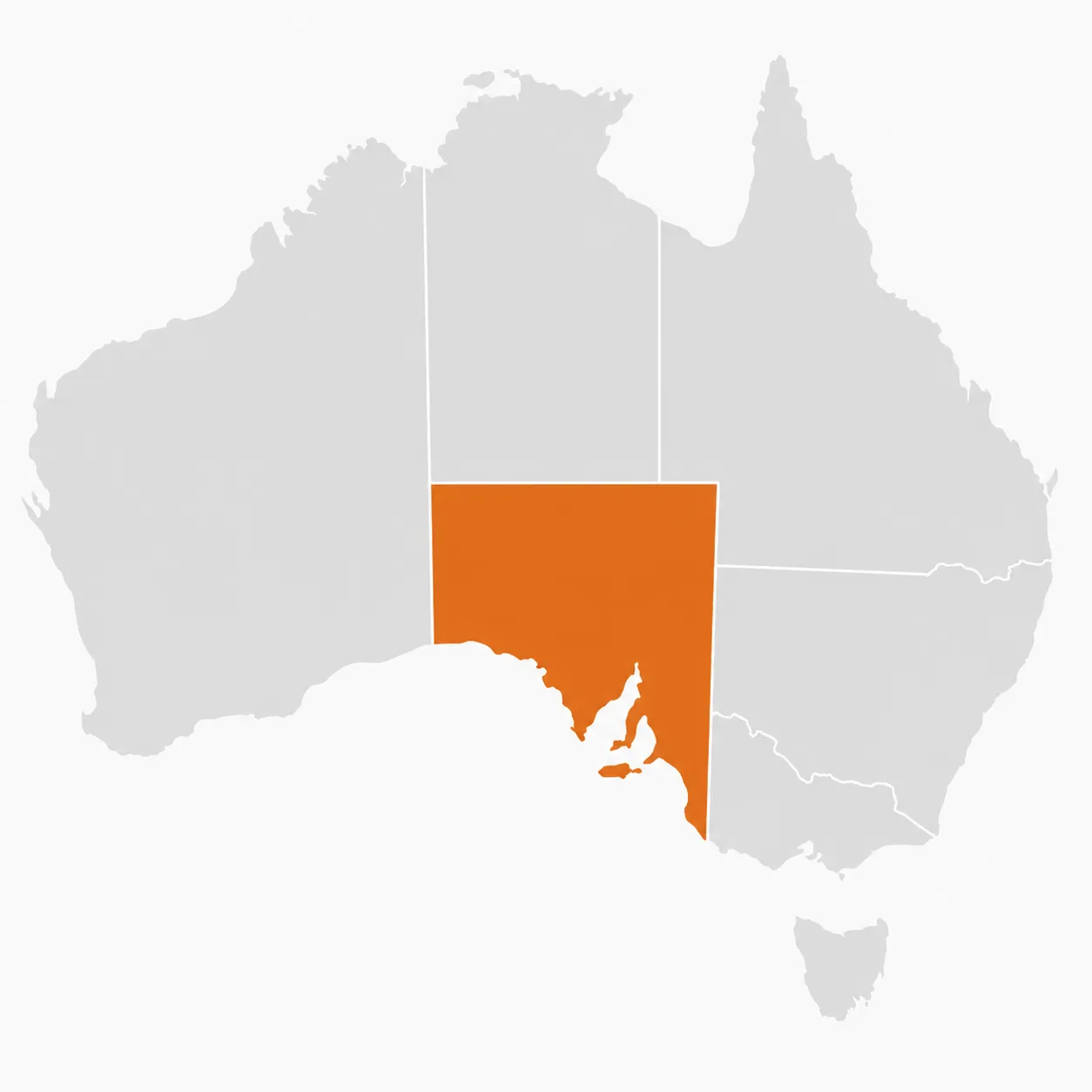
Commission rates differ significantly across Australia — not just between states, but between agency models within the same suburb. Understanding the national context helps vendors recognise what is standard, what is inflated, and what questions to ask before signing.
| State | Typical Range (Inc GST) | Average (Inc GST) |
|---|---|---|
| New South Wales | 1.8% – 2.5% | ~2.1% |
| Victoria | 1.6% – 2.5% | ~2.0% |
| Queensland | 2.2% – 3.3% | ~2.5% |
| South Australia | 1.5% – 2.75% | ~2.48% |
| Western Australia | 2.2% – 3.3% | ~2.7% |
| Tasmania | 2.0% – 3.0% | ~2.5% |
*Figures are indicative averages based on 2026 data from OpenAgent and Canstar. Actual rates vary by agency, property type, and sale price. All figures inclusive of GST unless otherwise stated.
Within South Australia, the Gawler district sees a wider spread than the state average — from 1.5% at independent agencies through to 2.75% at franchise operations. The difference on a $700,000 sale is $8,750 in commission alone.
What the table above does not show is what each rate includes. A 2.75% commission that covers Form 1 preparation, ad copywriting, floor plans, and signboards may represent better total value than a 2.0% rate where each of those items is charged separately. The only way to compare accurately is to ask for a full itemised cost of sale before signing — not just the commission rate.
The next section shows exactly what the total cost of selling looks like in the Gawler district — line by line — across two different agency models.
The Real Cost of Selling — A Gawler Comparison
Total Cost of Selling: Franchise Agency vs Independent Agent
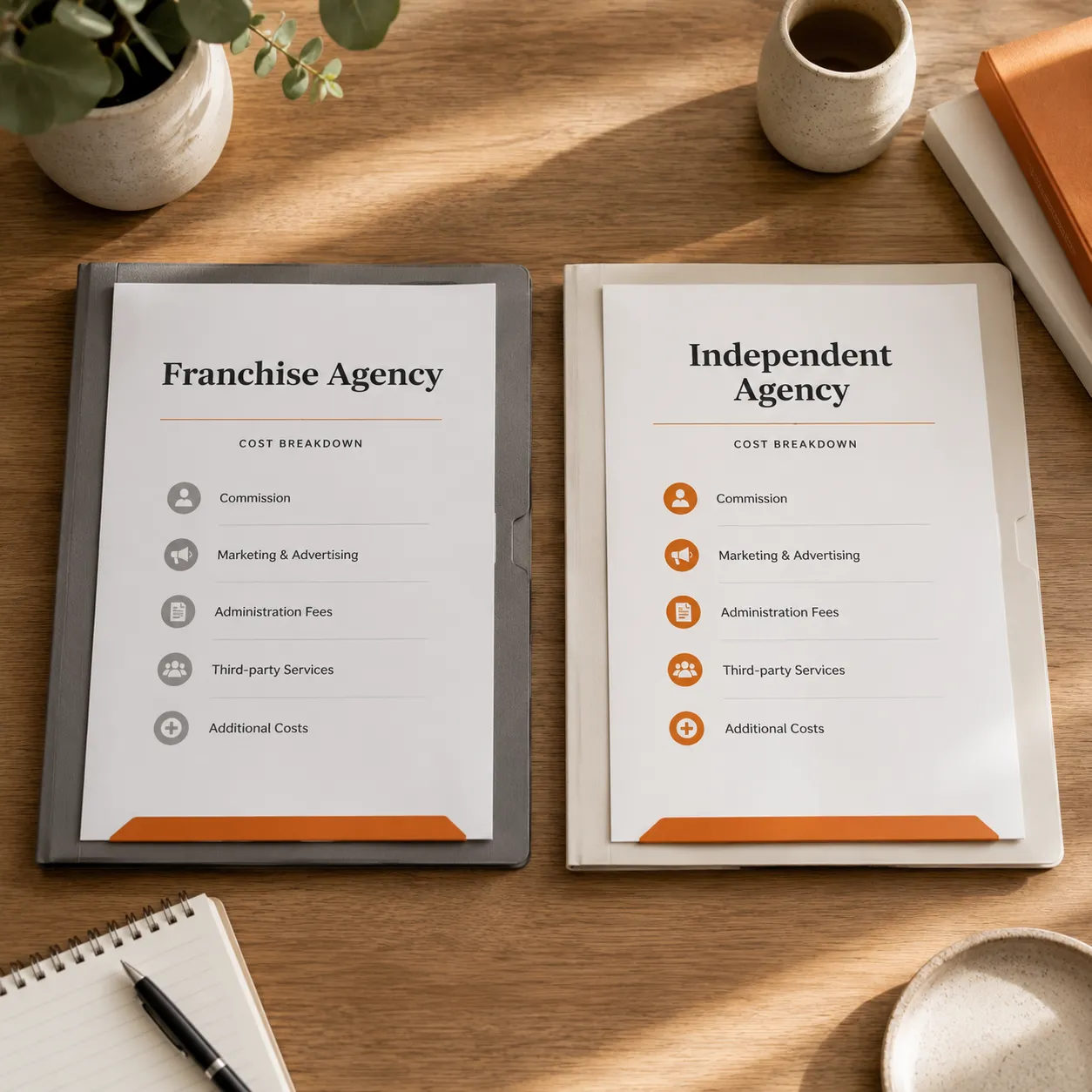
The commission rate is only one line item in the total cost of selling. The table below shows what a complete cost comparison looks like on a typical $700,000 house sale — including every item that commonly appears on a franchise agency cost schedule versus what is included at an independent agency.
| Cost Item | Franchise Agency | Gawler East Real Estate |
|---|---|---|
| Agent Commission (on $700,000) | $19,250 (2.75% inc GST) | $10,500 (1.5% inc GST) |
| Marketing (realestate.com.au & Domain) | ~$1,400 | ~$1,400 |
| Ad Copywriting | $210+ | ✓ Included |
| Floor Plan & Signboard | $255+ | ✓ Included |
| Brochures | $84+ | ✓ Included |
| Form 1 Preparation & Legal Searches | ~$2,000 (outsourced) | $800 (prepared in-house) |
| Administration / Establishment Fee | $550 – $745 | $0 |
| Total Projected Cost | ~$23,750+ | ~$12,700 |
| Total saving with Gawler East Real Estate — approximately $11,000 or more | ||
*Franchise figures based on 2026 industry averages. Actual costs vary by agency, state, and property. Gawler East Real Estate commission may be lower depending on property and situation. All figures inclusive of GST.
The Form 1 difference is worth understanding specifically. The Form 1 is a mandatory legal disclosure document that every SA vendor must provide to the buyer before contracts are exchanged. Many agencies outsource this to a third-party legal provider and charge the vendor accordingly — commonly $1,800–$2,200. Gawler East Real Estate prepares the Form 1 in-house, reducing that cost to $800.
To work out what the numbers look like for your specific property and situation, the selling costs calculator on this page lets you enter your own figures and see a detailed net proceeds estimate.
The full cost breakdown page shows every line item in detail — including how the Form 1 saving, administration fee removal, and commission difference combine to produce the total figure.
See the full cost breakdown for selling a home in Gawler →A Real World Example
What the Commission Difference Looks Like on an Actual Sale
Abstract comparisons are useful. A real sale is more useful. The case study below is based on an actual transaction — a $525,000 house sale where we documented every cost item from both a known franchise agency quote and the final Gawler East Real Estate cost schedule.
The comparison is not hypothetical. These are the numbers from a real agency agreement and a real settlement statement.
Case Study — Actual House Sale
$525,000 House Sale — Franchise Quote vs Final Cost with Gawler East Real Estate
| Cost Item | Franchise Quote | Gawler East Real Estate |
|---|---|---|
| Agent Commission | $13,125 (2.5% on $525k) | $7,875 (1.5% inc GST) |
| Marketing (realestate.com.au & Domain) | $2,694 | $1,400 |
| Legal Searches & Form 1 | $2,000 (outsourced) | $800 (in-house) |
| Administration Fee | $295 (discounted) | $0 |
| Total Cost | $17,819 | $10,075 |
| Vendor saving: $7,744 on a $525,000 house sale | ||
*Based on actual agency agreement and settlement statement. The franchise administration fee shown was already discounted from their standard $550–$745 charge. On a $700,000 house sale, the projected saving rises to $11,000 or more.
The commission difference on that sale was $5,250. But the total saving was $7,744 — because commission was only part of the gap. The Form 1 saving alone was $1,200. The marketing difference was $1,294. The administration fee added another $295. None of those line items appear in a commission rate comparison.
This is why the question "what is your commission rate?" is the beginning of the cost conversation — not the end of it.
To estimate what your own house sale would cost — and what you would keep — the selling costs calculator lets you enter your own figures and see a detailed net proceeds breakdown.
Use the selling costs calculator — estimate your net proceeds →Does a Lower Commission Mean a Lower Sale Price?
The Question Every Vendor Is Really Asking

The assumption that a higher commission produces a higher sale price is one of the most persistent myths in real estate. It persists because it sounds logical — pay more, get more. But commission is what the agent charges for their time. It has nothing to do with what buyers are prepared to pay for your house.
What determines the final sale price is a combination of four things — and none of them are the agent's commission rate.
1. Accurate pricing from day one
A house priced correctly at launch generates competition in the first 21 days — the period when buyer interest is highest. A house priced too high sits, goes stale, and eventually sells for less than an honest price would have achieved from the start.
2. Buyer reach — where your listing appears
Premium listings on realestate.com.au and Domain reach the same buyers regardless of whether the agency is a franchise or independent. The platform is what drives reach — not the size of the agency selling your house.
3. Managing buyer competition
A skilled agent creates urgency, manages multiple interested buyers strategically, and uses that competition to push the price higher. This is where negotiation experience matters — not in the commission rate.
4. Handling the offer stage without emotion
Vendors are emotionally attached to their house. A calm, experienced agent acts as the third party — managing buyer psychology, countering strategically, and protecting the vendor's outcome at the point where it is most at risk.
Commission can pay for itself — but only when the strategy behind it produces a result the vendor could not have achieved alone or through a less experienced agent. The commission rate is not what produces that result. The pricing accuracy, the negotiation skill, and the buyer management are what produce it.
Understanding how pricing strategy and negotiation interact — and what to look for in an agent before you sign — is covered in full on the pricing strategy page.
Read the property pricing strategy guide →Before You Sign Anything
Seven Questions to Ask Every Agent About Commission

The agency agreement is the most important document you sign before selling your house. Once it is signed, the commission rate, the marketing costs, and the terms of the campaign are locked in. These are the questions to ask before that happens — not after.
- What is your full commission rate, inclusive of GST? Always ask for the GST-inclusive figure. Agents commonly quote exclusive of GST — 2.5% sounds lower than the 2.75% inc GST it becomes. Confirm the exact percentage that will appear on the agency agreement. Why it matters: the figure on the agreement is what you pay — not the figure quoted verbally.
- What does the commission include — and what is charged separately? Ask for a full itemised list of everything included in the commission and everything that will be invoiced separately. Request this in writing before the appointment ends. Why it matters: ad copywriting, floor plans, signboards, and brochures are commonly excluded from commission and charged as extras.
- Who prepares the Form 1 — and what does it cost? The Form 1 is a mandatory legal disclosure document in South Australia. Ask whether it is prepared in-house or outsourced, and what the total cost is including all government searches. Why it matters: outsourced Form 1 preparation commonly costs $1,800–$2,200. In-house preparation can reduce this to $800.
- Is there an administration or establishment fee? Many agencies charge a separate administration fee of $550–$745 that is not included in the commission. Ask explicitly whether this applies. Why it matters: this fee is rarely mentioned upfront and commonly appears on the settlement statement as a surprise.
- If the property does not sell, what costs am I liable for? Commission is not payable if the property does not sell. Marketing costs usually are. Ask for a clear breakdown of what you would owe if you withdrew the property from the market after 30 days. Why it matters: understanding your exposure before signing protects you if the campaign does not produce the result you expected.
- Who will handle my sale — and will that person be present at every inspection and offer? At many agencies, you sign with the senior agent but are handed to a junior for open homes, buyer callbacks, and negotiation. Confirm in writing who is responsible for every stage. Why it matters: the quality of buyer management at the offer stage directly affects your final sale price.
- Can you show me the comparable sales you used to arrive at this price range? A genuine appraisal comes with evidence — specific properties, sale prices, land size, floor area, and dates. Ask to see the data before you accept the number. Why it matters: an agent who cannot or will not show their working is more likely to be quoting high to win the listing than to be giving you an honest market assessment.
For a full explanation of how agents use inflated appraisals to win listings — and how to identify it before you commit — the Appraisal Trap guide covers the tactic in detail, including the ABC Four Corners investigation into the practice.
Read the Appraisal Trap guide — including the ABC Four Corners investigation →For a more comprehensive set of questions to take into any agent meeting — covering communication style, local market knowledge, negotiation approach, and what happens after you sign — the full guide covers everything worth asking before you commit.
Full guide — questions to ask a real estate agent when selling your house →Who Handles Your Sale
Every Appraisal, Negotiation and Settlement — Handled Directly by the Principal

At many agencies, you sign with a senior agent and are then handed to a junior for open homes, buyer callbacks, and offer management. The person you met at the appraisal is rarely the person negotiating your final sale price.
At Gawler East Real Estate, every stage of the sale is handled directly by me — Andrew McKiggan, the principal and licensed agent. The person you meet at the appraisal is the person managing your buyer enquiry, running your open homes, handling every offer, and seeing your sale through to settlement.
Andrew McKiggan — RLA 248695
- Licensed Real Estate Agent — South Australia, RLA 248695 (since 2012)
- Diploma-level real estate licence — qualifies to operate an agency and manage contracts, compliance, and negotiation in full
- Over 25 years of corporate negotiation experience
- Principal of Gawler East Real Estate — locally owned, no franchise overhead
- Every appraisal, inspection, negotiation, and settlement handled personally
- Licence verifiable on the CBS Government Register
Most vendors only sell a small number of houses in their lifetime. That makes this one of the highest-stakes negotiations they will ever be involved in — often without any prior experience to draw on. I think that deserves more than a polished presentation and a promising number.
To verify the licence and see further details about how the agency operates, the about page covers the business structure, credentials, and approach in full.
About Andrew McKiggan and Gawler East Real Estate →