
Last Updated on March 11, 2026 by Andrew Mckiggan
Key Takeaways: Is Home Staging Worth It?
- The Short Answer: Yes. Industry data suggests staged homes sell for 5% to 10% more because buyers purchase based on emotional connection.
- The “Kitchen & Shed” Strategy: In Gawler and outer suburbs, you must win the “Heart” (Kitchen) and the “Head” (Shed/Garden) to secure a sale.
- Best ROI: “Soft Styling” (using existing furniture) and “Sweat Equity” (painting fences/cleaning concrete) often yield higher returns than full furniture rental.
- What NOT to do: Avoid “baking bread.” It feels fake to modern buyers. Instead, use the “Fresh Laundry” scent strategy for authenticity.
Read on for the full breakdown of costs vs. returns.
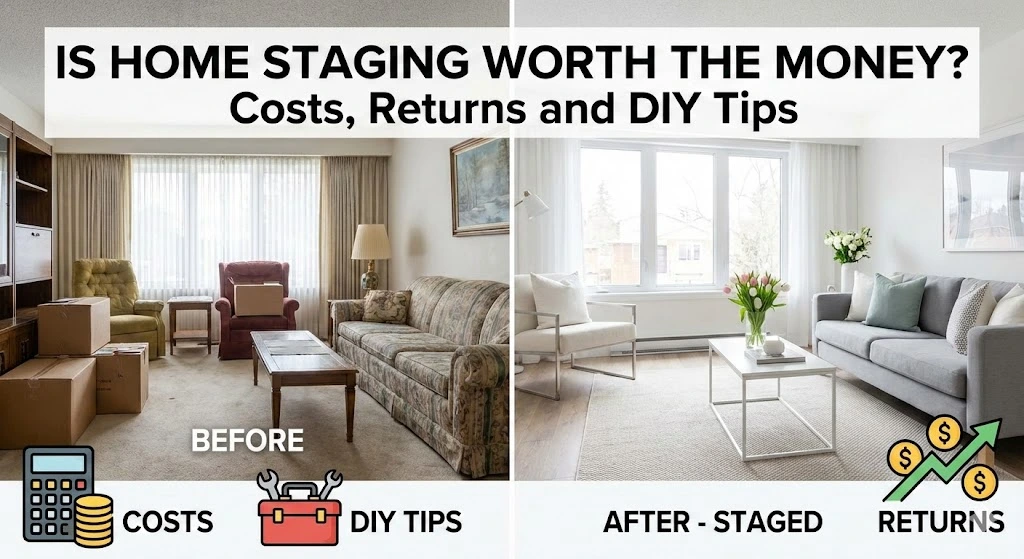
The Presentation vs Price Dilemma
If you’re thinking about selling your home, you’ve probably noticed the difference between a lived-in property and one that looks like it belongs in a magazine.
That polished look is usually the result of home staging (also known as property styling).
But as a seller, your goal isn’t just to make the house look pretty. Your goal is to maximize the final sale price. So the real question becomes:
Is home staging actually worth the money, or is it just an unnecessary expense?
The honest answer is: yes—but only when it’s part of the right strategy.
In markets like Gawler and the surrounding suburbs, I see this play out constantly. Buyers purchase on emotion as much as logic. If they can’t imagine themselves living in the home, they rarely pay a premium price.
Over the years, I’ve seen small presentation changes add tens of thousands of dollars to a final sale price—and I’ve also seen sellers waste money on styling that didn’t move the needle at all.
The difference is always the strategy.
What Exactly Is Home Staging?
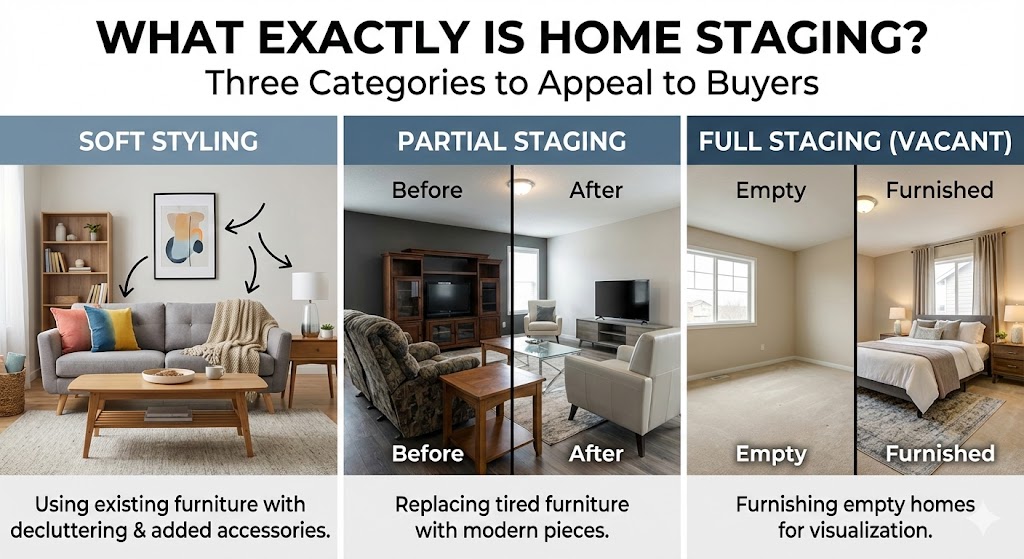
Many sellers assume staging means removing all furniture and paying thousands to rent designer lounges. While that is one form of staging, it’s not the only option.
Home staging simply means preparing a property to appeal to the widest range of buyers.
In practice, it usually falls into three categories.
Soft Styling
Using your existing furniture while decluttering and rearranging the layout.
A stylist may add:
- Cushions
- Throws
- Artwork
- Lamps
This modernises the look without major expense.
Partial Staging
Replacing tired or oversized furniture with modern pieces.
I’ve seen this make a huge difference in:
- Older living rooms
- Dark bedrooms
- Homes with bulky recliners or mismatched furniture
Rooms suddenly feel:
- Larger
- Brighter
- More functional
Full Staging (Vacant Homes)
Empty homes often feel:
- Cold
- Smaller than they actually are
- Hard for buyers to visualise
Full staging fills the home with furniture so buyers understand how each space works.
Why Home Staging Increases Sale Price
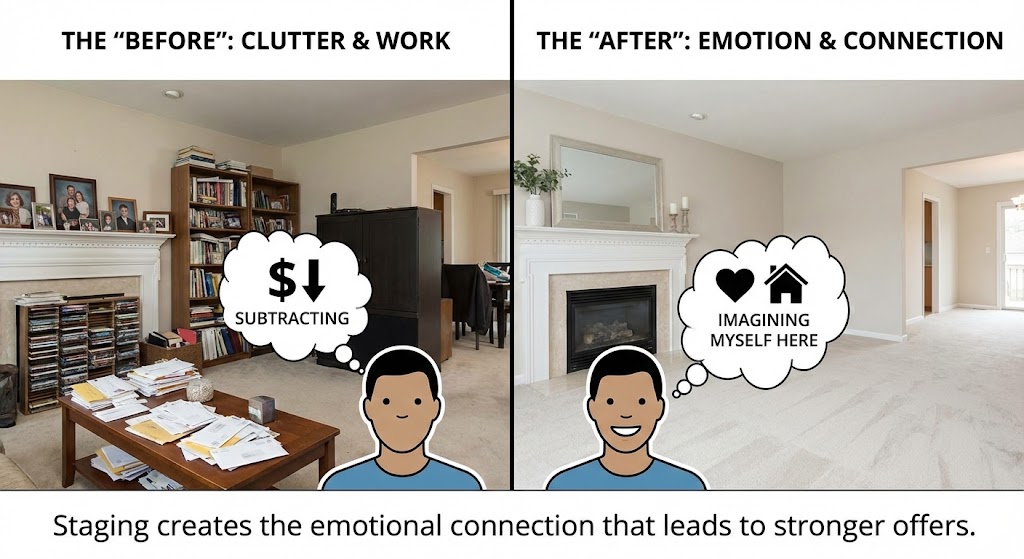
When a buyer walks into a home, they usually form an emotional opinion within 30 to 60 seconds.
If they see:
- Clutter
- Personal photos
- Oversized furniture blocking walkways
Their brain registers “work.”
They start mentally subtracting money from their offer.
If they walk into a home that feels:
- Clean
- Open
- Light
- Easy to live in
They imagine themselves there.
That emotional connection is what creates stronger offers.
Important:
Well-presented homes attract more buyers, more competition, and stronger final prices than comparable unstaged properties.
Industry data often suggests staged homes sell for 5% to 10% more.
On a $600,000 home, that’s:
- $30,000 to $60,000
And in real-world sales, I’ve seen small presentation changes create exactly that kind of difference.
This is why presentation plays such a key role in any well-planned property pricing strategy
The Kitchen and Shed Strategy: Winning Both Decision-Makers
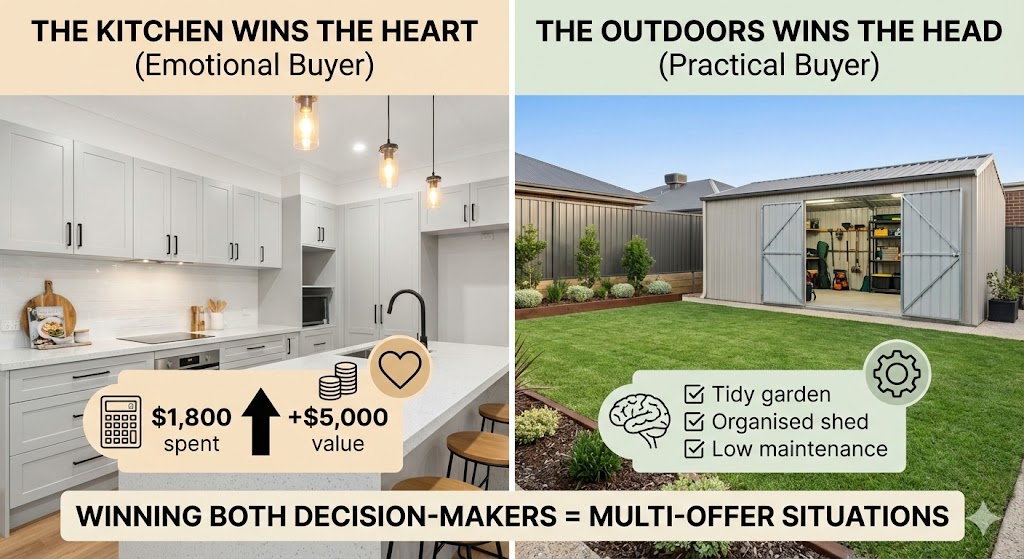
In my experience, the best results come when you win over every decision-maker in the household.
You need to win:
- The emotional buyer
- The practical buyer
The Kitchen Wins the Heart
You don’t always need a full renovation.
If the layout works but the colours are dated, I’ve seen great results from:
- Spraying cupboard doors
- Replacing old handles
- Updating lighting
I recently worked on a property where we replaced the benchtop for roughly $1,800.
That single change modernised the whole kitchen and, in my professional opinion, added at least $5,000 to the final sale price.
It’s not about spending a fortune.
It’s about spending where buyers notice it.
The Outdoors Wins the Head
While the kitchen creates emotion, the outdoors builds confidence.
Buyers love:
- Tidy gardens
- Low-maintenance landscaping
- Clean, organised sheds
When a home has:
- A fresh kitchen
- A neat yard
- A good shed
You remove objections from both sides of the decision.
That’s when multi-offer situations start to happen.
The Low-Cost Alternative: Sweat Equity Staging
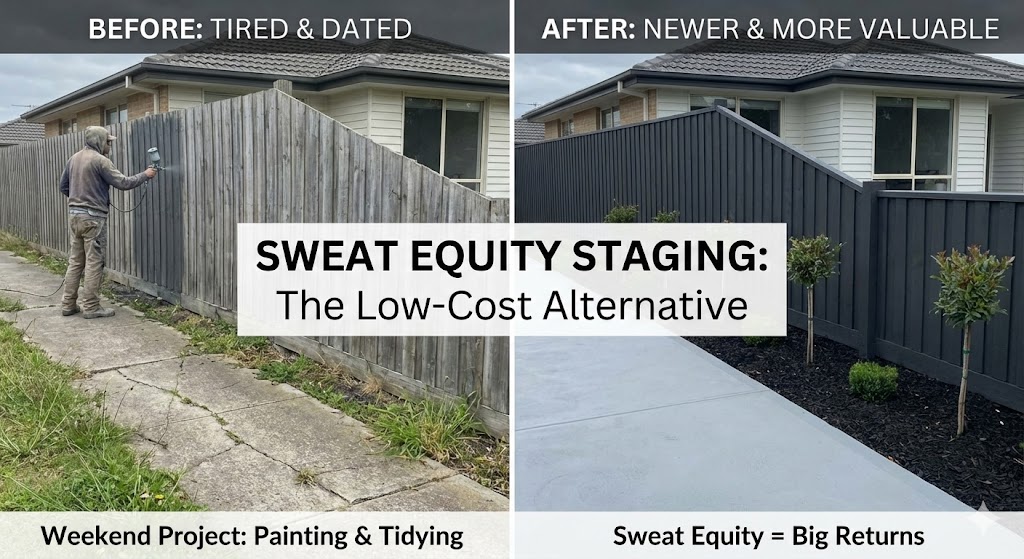
Professional staging is powerful, but some of the biggest returns I’ve seen come from simple, hands-on improvements.
You don’t always need a stylist.
I’ve personally grabbed a spray gun and spent a weekend:
- Painting fences
- Freshening concrete paths
- Tidying outdoor areas
And the property suddenly looked:
- Newer
- Better maintained
- More valuable in the buyer’s eyes
The Kerb Appeal Ritual
Never underestimate the impact of the front yard.
Before inspections, I always recommend:
- Mowing the lawn
- Deep watering the grass
- Tidying the edges
That lush, green look—and even the smell of fresh grass—creates a feeling of care before buyers step inside.
Quick Win:
Mow and water the lawn before every inspection.
It’s one of the cheapest ways to improve buyer perception.
The Weekend Paint Upgrade
A few tins of paint can completely change how a home is perceived.
Fences
I’ve personally seen old grey fences transformed with:
- Charcoal tones
- Monument colours
- Fresh timber finishes
It frames the yard and makes the property feel newer.
Concrete
Painting tired concrete:
- Driveways
- Verandas
- Paths
Can hide decades of wear for very little cost.
Real-World Result:
Simple paint upgrades can create a “renovated” feel and often add far more value than the cost of materials.
The “Bake a Loaf of Bread” Trick… and Why It Feels Dated Today
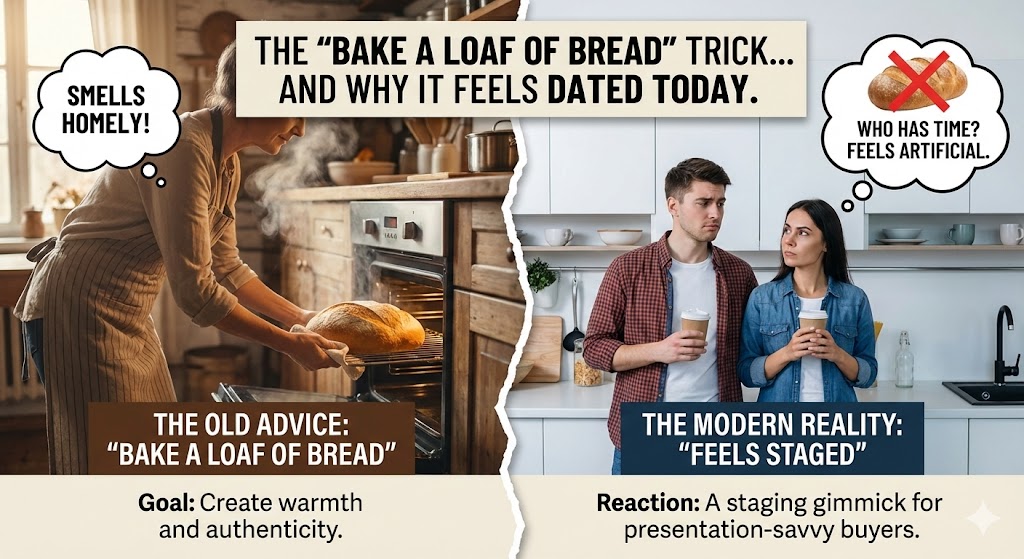
You’ve probably heard the old advice:
“Bake a loaf of bread before the inspection so the house smells homely.”
Does it work?
No—not in most modern homes.
In today’s market, the bread trick often feels staged, outdated, and unrealistic.
Most households:
- Don’t bake bread regularly
- Don’t have the time
- Don’t have the inclination
For many buyers, that smell simply doesn’t match how people live anymore.
Instead of feeling authentic, it can feel like:
- A staging gimmick
- An old real estate trick
- Something artificial
Buyers today are far more presentation-savvy.
When they smell bread, the reaction is often:
“They’re trying to stage this.”
Important:
If a smell feels staged or unrealistic, it can reduce buyer confidence instead of improving it.
What Actually Works: Smells That Feel Real
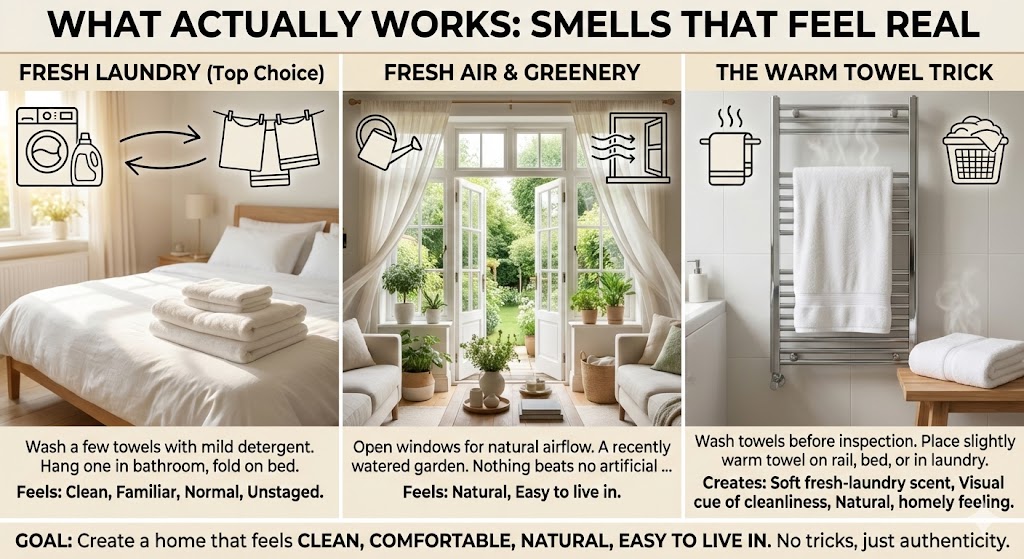
The goal isn’t to impress buyers with a trick.
The goal is to create a home that feels:
- Clean
- Comfortable
- Natural
- Easy to live in
Fresh Laundry (My Top Choice)
One of the most universally liked home scents.
It feels:
- Clean
- Familiar
- Normal
- Unstaged
How to replicate it:
- Wash a few towels with mild detergent
- Hang one in the bathroom
- Fold one neatly on a bed
Fresh Air and Greenery
Often the best scent is no artificial scent at all.
Nothing beats:
- Open windows
- Natural airflow
- A recently watered garden
The Warm Towel Trick
One of the simplest techniques I recommend:
- Wash a few towels before the inspection.
- Place one slightly warm towel:
- On the bathroom rail
- Folded on a bed
- In the laundry
It creates:
- A soft fresh-laundry scent
- A visual cue of cleanliness
- A natural, homely feeling
When Home Staging Is NOT Worth It
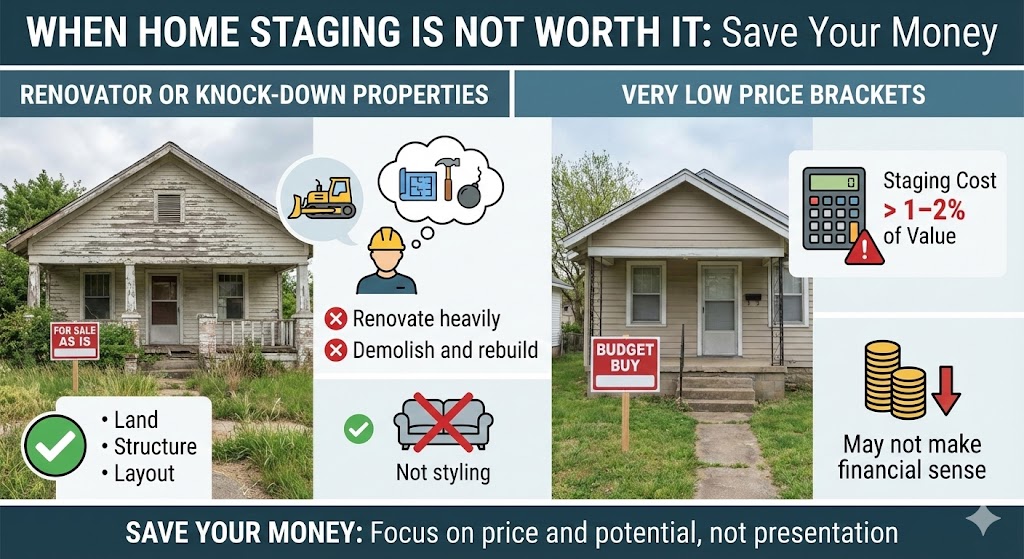
There are times I tell sellers to save their money.
Renovator or Knock-Down Properties
If buyers plan to:
- Renovate heavily
- Demolish and rebuild
They’re looking at:
- Land
- Structure
- Layout
Not styling.
Very Low Price Brackets
If staging costs more than 1–2% of the property value, it may not make financial sense.
Start With the Numbers
Before you spend a dollar on staging or improvements, you need to know what your home is worth right now.
Writing
Smart First Step:
Get an evidence-based property appraisal before spending money on staging or renovations.
If you’re selling in Gawler or nearby suburbs, I can:
- Assess your home
- Show you competing properties
- Explain where presentation will add value
- Tell you honestly where it won’t
One Final Practical Tip
If you’re still deciding whether to sell, start with the lawn.
Grass takes about a month to fully recover.
So while you consider your options, turn on the sprinklers today.
Future You (and your bank balance) will thank you.
Frequently Asked Questions About Home Staging & Presentation
Is home staging actually worth the money?
Yes—but only when executed with the right strategy. The Reason: Industry data suggests staged homes can sell for 5% to 10% more than unstaged ones. This happens because buyers purchase on emotion; if they can imagine themselves living in the home, they are more likely to offer a premium price. The Nuance: Staging is not worth it for “renovator’s delights” or knock-down properties where buyers are paying for land and structure rather than livability. If the cost of staging exceeds 1–2% of a low-value property, it may not make financial sense.
Do I need to rent new furniture to stage my house?
Not necessarily; “Soft Styling” is often sufficient. The Reason: Many sellers assume staging requires emptying the house, but Soft Styling uses your existing furniture while decluttering, adding cushions, throws, and artwork to modernise the look. The Nuance: Renting furniture (“Full Staging”) is generally recommended for vacant homes, as empty rooms often feel cold and smaller than they actually are. For lived-in homes, “Partial Staging” (replacing just bulky or tired items) is a cost-effective middle ground.
What are the most cost-effective ways to improve my home’s value before selling?
Focus on “Sweat Equity” in the kitchen and the garden. The Reason: You don’t need a full renovation. Small changes like spraying old cupboard doors, replacing handles, or painting fences and concrete paths can modernise a property instantly. The Nuance: I call this the “Kitchen and Shed Strategy.” The kitchen wins the “emotional buyer,” while a tidy garden and shed win the “practical buyer.” Addressing both removes objections from all decision-makers in the household.
Should I bake bread before an open inspection to make the house smell homely?
No, this is an outdated tactic that often backfires. The Reason: Modern buyers are savvy; the smell of baking bread often feels artificial or like a “staging gimmick,” which can lower their trust in the property. The Nuance: A better strategy is to aim for a “Clean Laundry” scent (washing towels with mild detergent) or simply opening windows for fresh air. This feels natural, clean, and authentic rather than staged.
How early should I start preparing my garden for sale?
Start immediately—ideally one month before listing. The Reason: Grass takes time to recover. Simply turning on the sprinklers and mowing regularly can transform a dry yard into a lush, green asset by the time inspections start. The Nuance: This is part of the “Kerb Appeal Ritual.” A deep-watered, freshly mowed lawn creates a subconscious feeling of care and value before the buyer even steps inside the front door.
Ready to Sell?
Presentation is just one part of a successful sale strategy.
Before you make any decisions, get clear advice on:
- Your current value
- Buyer demand
- The best presentation plan
To see how we structure campaigns and keep commissions low, learn more about selling your home with Gawler East Real Estate
Or call Andrew on 0493 539 067 for straightforward advice.

