
What Real Estate Agent Fees Actually Pay For — And What Has to Go Right Before Any Commission Is Earned
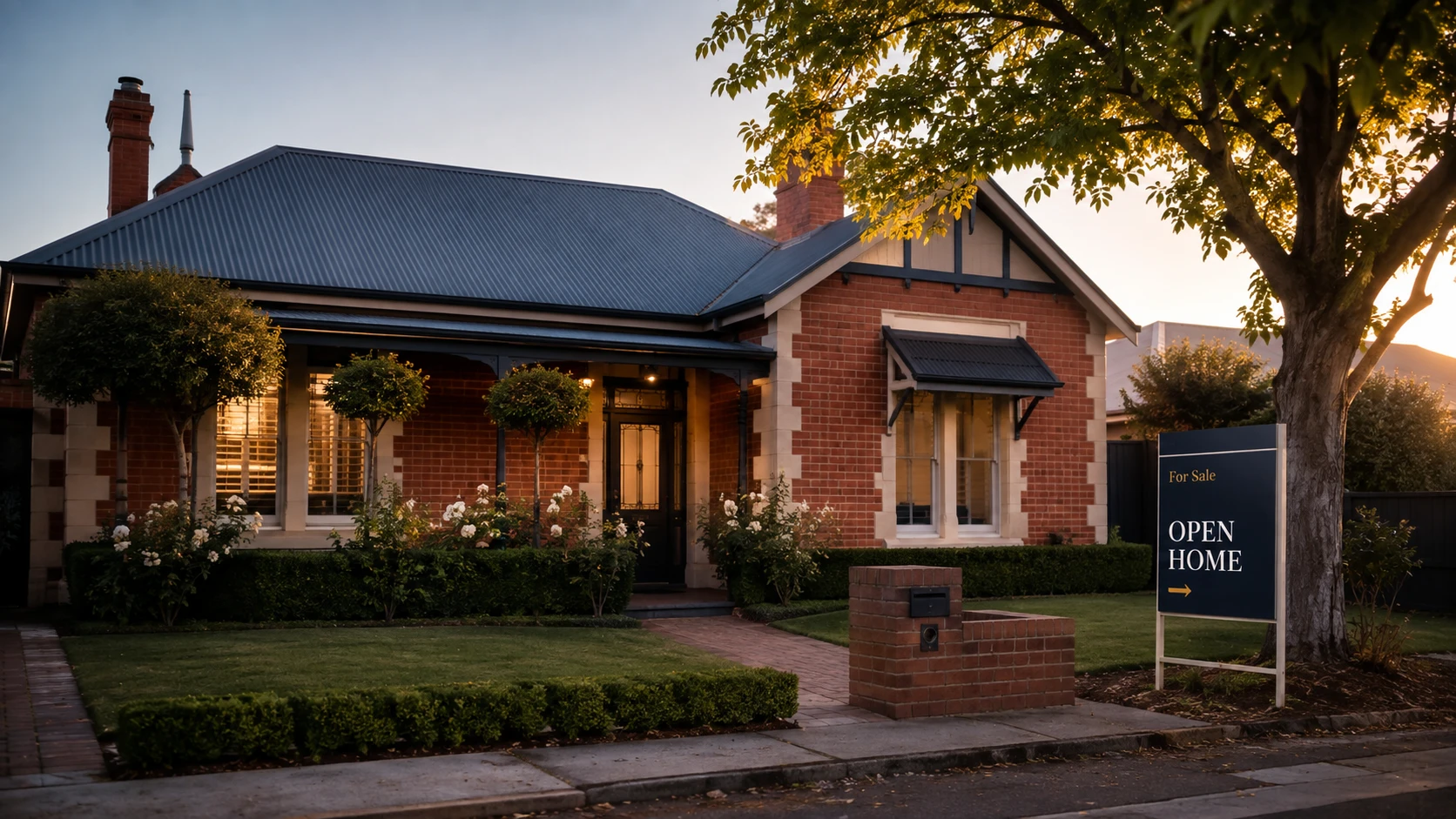
When people start comparing real estate agent fees, they're usually trying to answer a much bigger question. How do I know I'm choosing the right agent? It's completely understandable. Most people only sell a handful of homes in their lifetime, so commission is often the easiest thing to compare. It's a number. It's visible. It feels objective.
But one thing I've learnt is that commission is the last thing that's earned—not the first thing that determines the outcome of your sale.
If you're looking for average commission rates, you'll find them further down this page. I haven't started there because I don't think that's the most important conversation. Before deciding whether any commission represents good value, it helps to understand everything that has to happen before an agent earns it. That's what this page is about.
Once you understand that, deciding whether 1.5% including GST represents good value becomes a much easier conversation.
A successful house sale isn't one decision.
It's a series of decisions made in the right order.
What Has To Go Right When Selling A House
One of the biggest misconceptions about selling a home is that one decision determines the outcome.
It doesn't.
Successful sales are usually the result of dozens of good decisions, made in the right order. Most of them happen long before an offer is ever made, and none of them can be judged by looking at a commission percentage.
Every House Sale Starts With A Different Goal
Before we talk about marketing, pricing or commission, there's one question I always ask.
What does a successful sale actually look like for you?
For some people it's achieving the highest possible price.
For others it's selling before they've committed to another property.
Sometimes it's having certainty around timing because life has already moved on.
There isn't one right answer.
That's why I don't believe every home should be sold the same way. The decisions made throughout the campaign should reflect what's most important to you, not what's easiest for the agent.
Pricing Your House For Sale
Almost every homeowner asks the same question first.
It's a fair question. But it isn't actually the one that matters most.
"What's my house worth?"
"What price brings the right buyers through the door?"
One number is an opinion. The other is a strategy.
Those two numbers aren't always the same. The strategy is the one that encourages buyers to compete with each other, because that's where stronger sale prices are often created.
Preparing Your House For Sale
Buyers don't walk into a home looking for reasons to buy it.
They walk in looking for reasons not to.
Preparation isn't about creating a perfect home or spending thousands of dollars on renovations. It's about removing the small distractions that stop buyers seeing everything that's already good about your property. Sometimes the smallest improvements make the biggest difference.
Photography And The First Impression
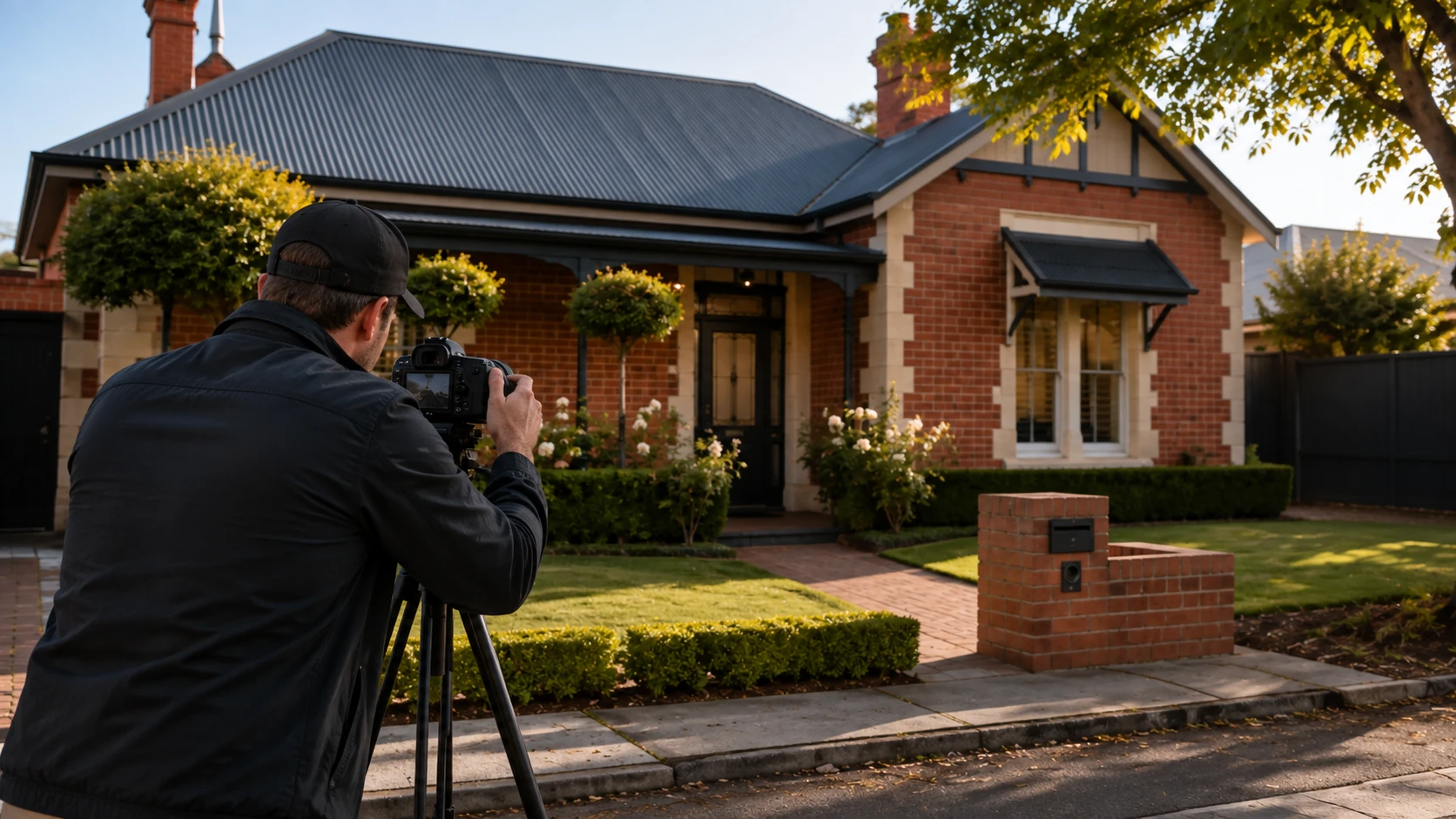
The First Impression Most buyers decide whether your property is worth inspecting before they've read a single sentence.
They inspect the homes that make them curious enough to click.
That's why good photography isn't really about photography. It's about earning the next five minutes of someone's attention. And you only get one opportunity to make that first impression.
The First Two Weeks Matter More Than Most People Realise
Why Timing Matters The first couple of weeks after your property goes live are often when buyer interest is at its highest.
You can usually create that excitement once. It's much harder to recreate it later.
That's why so many of the earlier decisions—pricing, presentation, photography and timing—need to be right before your property even reaches the market.
Reading Buyer Behaviour
Buyers don't always behave the way you'd expect. The loudest buyer at an open inspection often isn't the one who eventually buys the property.
Enthusiasm is easy to recognise.
Intent usually isn't.
One of the most valuable parts of an agent's job is recognising the difference and understanding which conversations are genuinely leading somewhere.
Negotiation Starts Before The First Offer
Most people think negotiation starts when the first offer arrives.
In reality, it usually starts much earlier.
By the time someone makes an offer, they've often already decided what the property is worth to them. How your property has been presented, how much buyer interest has been created, and how buyers perceive its value all influence that decision long before anyone puts a number on paper.
Good negotiation begins well before the negotiation itself.
Everything After The Offer
This is the part of selling that rarely appears in advertising.
- Contracts.
- Finance approvals.
- Building inspections.
- Settlement dates.
- Unexpected problems.
- Keeping everyone informed.
- Making sure deadlines are met.
It's also the part most homeowners never really see.
Until something goes wrong.
A great deal of an agent's work happens quietly in the background, solving problems before they become reasons for a sale to fall apart. And that's often where the value of experience becomes most obvious.
Why Real Estate Agent Commission Isn't The Whole Story
One question has probably been sitting quietly in the background while you've been reading this.
If two agents both charged exactly the same commission, would you automatically expect them to achieve the same result?
Probably not.
So why do we often assume the opposite is true? Why do we assume that if one agent charges more than another, they must automatically be providing more value?
The reality is that none of the decisions we've just talked about can be judged by looking at a percentage. The commission percentage tells you one part of what you'll pay. It doesn't tell you how well your property will be priced, presented, marketed, negotiated or guided through to settlement.
That's one of the biggest misconceptions in real estate.
And it's rarely discussed before you sign an agency agreement.
The Real Estate Appraisal Trap When Selling A House
If there's one part of the selling process where I see homeowners get caught out most often, it's pricing. Not necessarily because anyone is trying to mislead them. Sometimes two agents genuinely see the market differently. Sometimes an optimistic appraisal is honestly believed. Sometimes it's simply easier to believe the number you were hoping to hear. That's human nature.
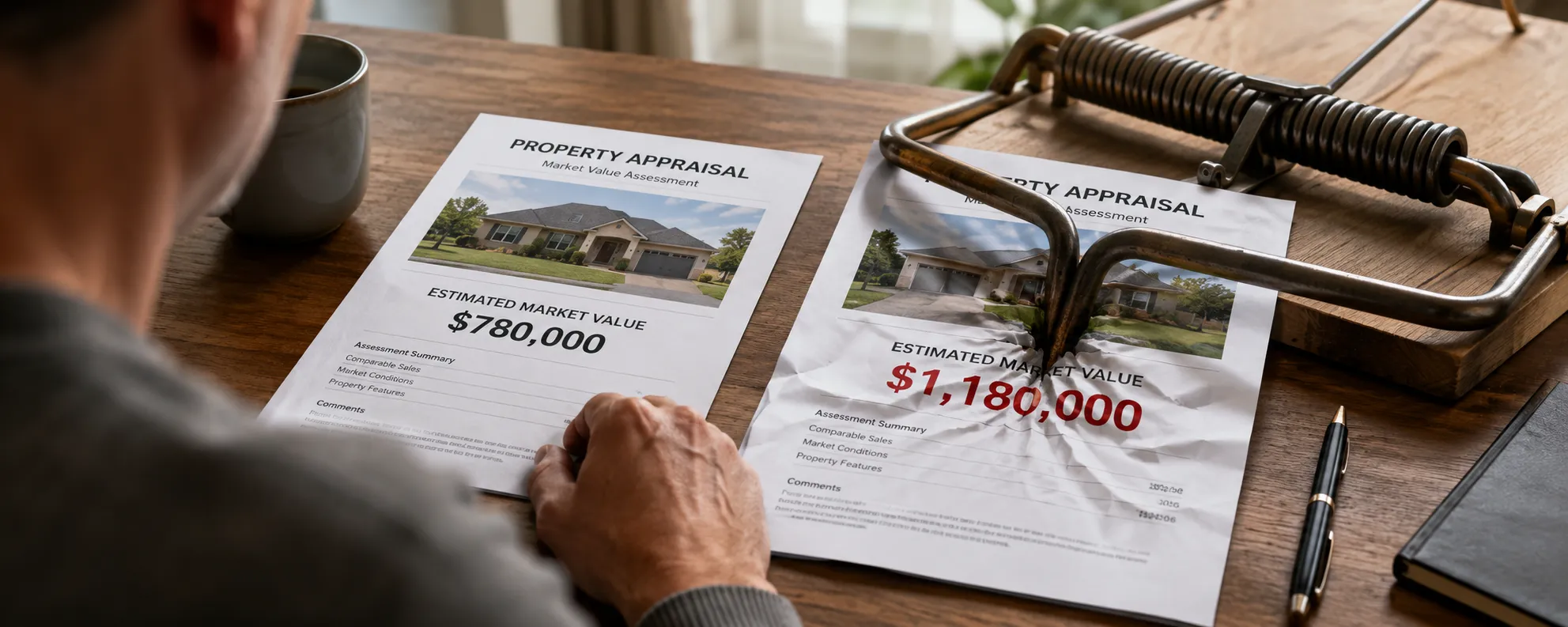
Imagine inviting three agents to appraise your home.
One believes it's worth around $690,000.
Another confidently says $750,000.
Which one would you want to believe?
Most of us would naturally lean towards the higher figure. Not because we're being unrealistic. Because we want to believe our home is worth as much as possible. Unfortunately, that's where problems can begin.
The property goes to market.
The first few weeks pass.
Very few enquiries. No meaningful offers.
Eventually the conversation changes.
"Maybe we should reduce the price."
By then, the property has already missed the period when buyers were paying the closest attention.
The home eventually sells for $705,000.
Not because the house suddenly became worth $45,000 less.
Because the original price was never supported by the evidence.
This is where I think homeowners need to be particularly careful.
There is a practice in the industry where an agent can give a homeowner an optimistic appraisal to help secure the listing, knowing that once the property is on the market and buyers don't respond, the price can gradually be conditioned down.
I don't believe that's an acceptable way to win someone's business.
An appraisal should be an honest assessment of what the available evidence supports — not a number designed to make a homeowner choose one agent over another.
That's why I encourage every homeowner to ask one simple question before signing with any agent:
"Can you show me the comparable sales from the last 90 days that support your appraisal — and what happened to the properties that started higher than where they eventually sold?"
That question changes the conversation.
An agent who can show you the evidence is helping you understand the market. An agent who relies only on confidence is asking you to trust an opinion. There's an important difference.
Read the full Appraisal Trap breakdown — including what can happen when an optimistic appraisal is used to win the listing →Questions To Ask A Real Estate Agent Before Selling Your House
By this point you've probably realised something. Choosing an agent isn't really about comparing commission. It's about understanding what you're getting for it. The good news is you don't need to become an expert overnight. Sometimes asking a few simple questions tells you far more than any brochure or presentation ever will. These are the questions I'd encourage every homeowner to ask, regardless of which agent they're considering.
What Will The Real Estate Commission Actually Cost Me?
Percentages are useful for comparison.
Dollars are what you'll actually pay.
Ask: "What does your commission come to in dollars based on the expected sale price of my home?" It keeps the conversation practical and makes it much easier to compare different proposals.
What's Included In The Real Estate Agent's Fee?
Not every agency includes the same services. Some include photography, signboards, brochures or advertising. Others charge for them separately.
Ask: "Can you show me everything that's included, and everything that's an additional cost?" There shouldn't be any surprises after you've signed.
Where Will My House Be Advertised?
Not all online advertising is the same. Different listing levels receive different exposure, and if your likely buyer is relocating from interstate, websites like Domain can be just as important as realestate.com.au.
Ask: "Which websites will my property appear on, and what level of advertising is included?"
Who Prepares The Form 1, And What Does It Cost?
Many homeowners don't realise this is often a separate expense. Some agencies prepare it in-house. Others outsource it.
Ask: "Who prepares my Form 1, and what will it cost me?" Understanding this upfront avoids unnecessary surprises later.
Are There Administration Or Establishment Fees?
Not every agency charges them.
Some do. Some don't.
Ask the question directly. Knowing every cost before you sign is always better than discovering it afterwards.
What Happens If I Change My Mind?
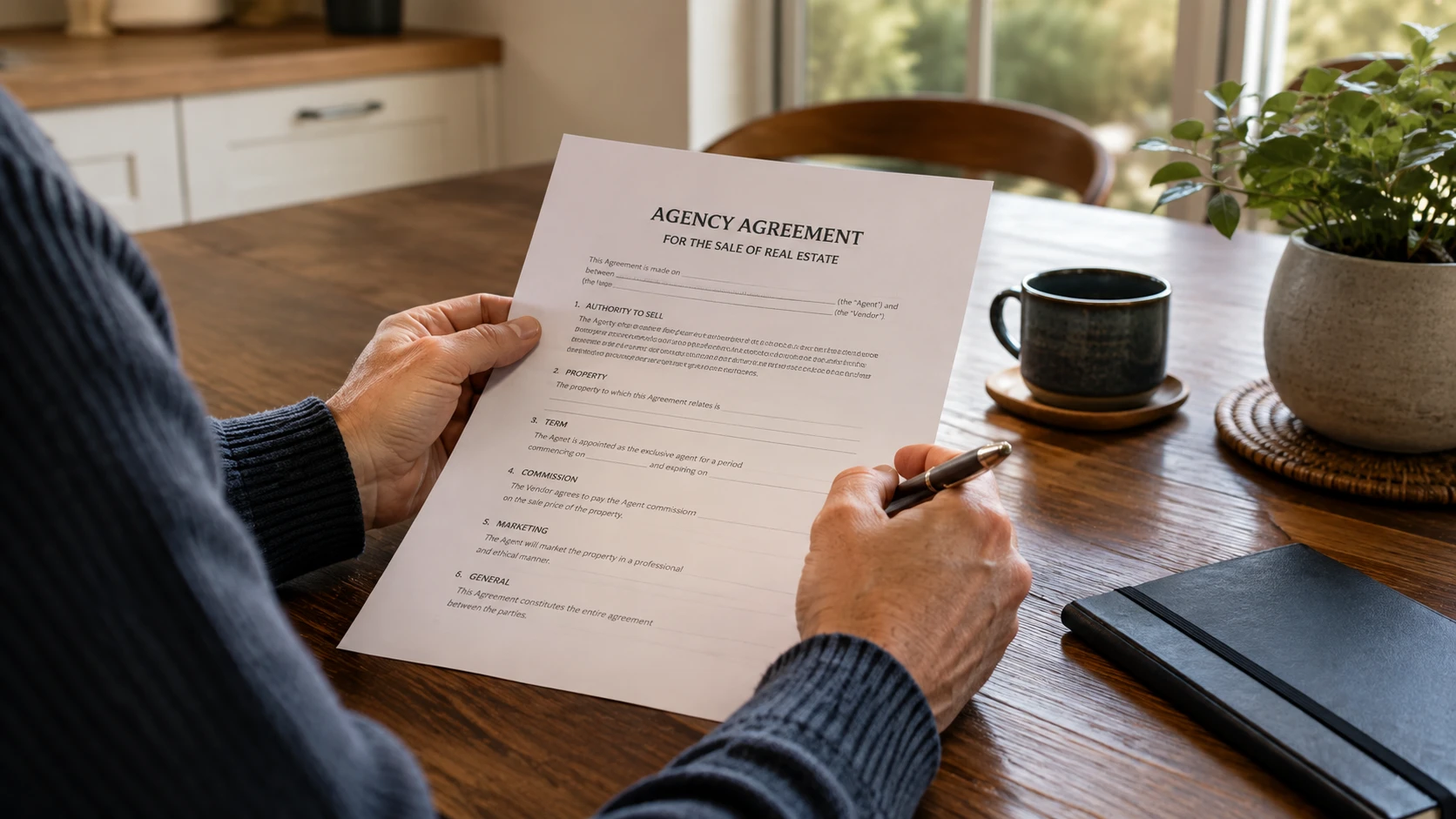
Hopefully you never need to. But it's still worth understanding your Sales Agency Agreement before signing it.
There isn't a general cooling-off period simply because you change your mind after signing an agency agreement. Before you sign, ask what the agreement says about its length, termination and any costs if you decide not to proceed.
Read the full explanation in the FAQ below: What should I check before signing a Sales Agency Agreement?
Andrew's Tip: Read Your Listing Like A Buyer, Not The Owner
One of the simplest things you can do before your property goes live is read your listing as though you've never seen the home before.
Forget the memories.
Forget what you already know.
"If this wasn't my home, would this advertisement make me want to inspect it?"
Sometimes a small change to the wording, the order of the photographs or the way a feature is described can completely change the way buyers see a property. That's why I always encourage sellers to read their advertisement with fresh eyes before it goes live.
Take land size as an example. Many newer estates around Gawler now offer allotments of around 300m². If your home sits on 450m², that is not just a number — it is a genuine point of difference.
"450m² allotment."
"Set on approximately 450m² — around 50% more land than many comparable new homes in the area, providing genuine space for a future shed, workshop, or larger backyard for growing families."
Commission, Finally
By now, you've probably realised why I haven't started this page with a commission percentage. So let's finally talk about what I charge — and exactly what that fee includes.
The commission percentage is not the total cost.
Understanding what you'll actually keep at settlement is what matters.
What Do Real Estate Agents Actually Charge?
If you've searched for the average real estate commission in Australia, you've probably already discovered there isn't one simple answer. There is no single, regulated commission rate that every agent charges. It varies between states, agency models and individual businesses. That's why comparing percentages on their own rarely tells you very much. The better question isn't: "What does this agent charge?" It's: "What am I actually receiving for that fee?"
| State / Territory | Typical Commission (Inc GST) |
|---|---|
| New South Wales | 1.8% – 2.5% Metro typically lower, regional higher |
| Victoria | 1.6% – 2.2% Among the lowest nationally |
| Queensland | 2.5% – 3% Brisbane metro typically lower than regional |
| South Australia | 2% – 2.75% Franchise agencies at the higher end; independents often lower |
| Western Australia | 2.5% – 3% Perth metro above the national median |
| Tasmania & NT | 2.5% – 3.5% Among the highest nationally |
Commission benchmarks based on 2026 data from OpenAgent and Canstar. Rates vary by location, agency model and property type — verify current rates with agents in your area.
Why Gawler East Real Estate Charges Up To 1.5% Including GST
People occasionally ask how I can charge up to 1.5% including GST when other agencies quote considerably more. The reason comes down to how the business is structured, not the level of service. I don't pay franchise fees. I don't have a head-office structure. I don't split commissions with a head office. That means more of the fee you pay goes towards selling your property—not supporting a larger business structure.
It's a starting point, not a fixed rate.
Gawler East Real Estate's commission starts at up to 1.5% including GST — the actual figure is flexible and depends on the value of the property and the circumstances of the sale. I also don't believe every property should attract exactly the same commission percentage. As the value of a property increases, the effective commission rate reduces. I believe that's a fairer way of charging. Selling a $1.2 million home doesn't automatically involve twice the work of selling a $600,000 home, so I don't believe the commission should simply continue increasing at the same percentage forever.
What You're Actually Paying For
When you choose Gawler East Real Estate, you're dealing directly with me from our very first conversation through to settlement. Your sale isn't handed to a junior salesperson. It isn't passed between different departments. The person you choose is the person who manages your sale from beginning to end.
- ✓ Direct access to me throughout your sale
- ✓ Every open inspection personally attended
- ✓ Advertising on both realestate.com.au and Domain
- ✓ Professional copywriting, photography coordination, floor plan, signboard and brochures
- ✓ Form 1 (Vendor's Statement) prepared in-house for $800 including GST — this is what we charge for the work, not a government-set fee
- ✓ No administration fees
- ✓ No establishment fees
My job isn't to pressure you into making a decision. It's to make sure you understand it before you make one.
What Does Selling A House Actually Cost?
Everything we've talked about so far has been about understanding where value is actually created. Now let's look at what that looks like in practice. This isn't intended to prove that every sale is the same. It's simply a real example showing what selling a home can actually cost when every fee, every inclusion and every decision is made completely transparent.
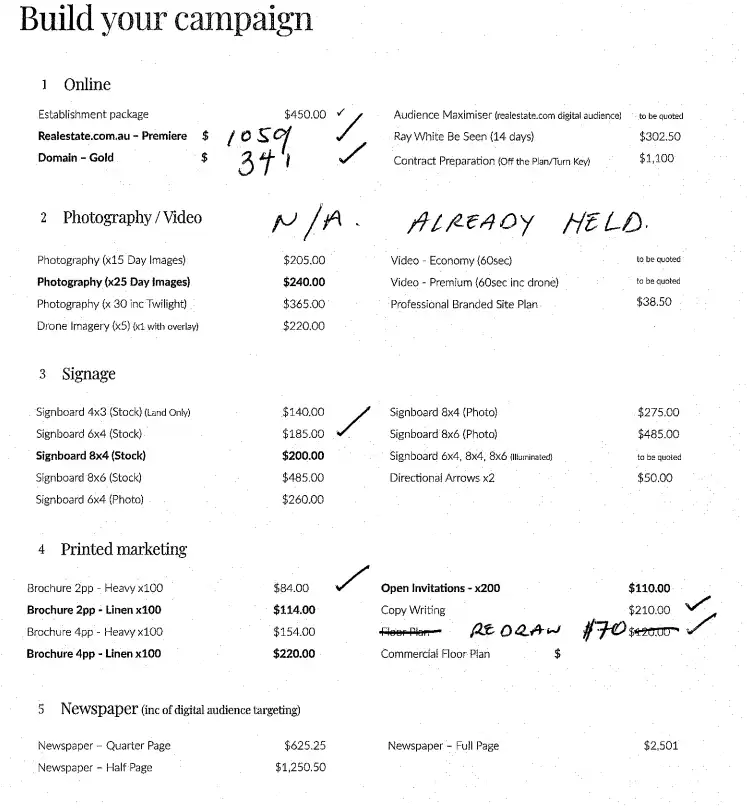
Comparison based on a real $525,000 property sale in the Gawler region — documented with original agency agreements and marketing schedules.
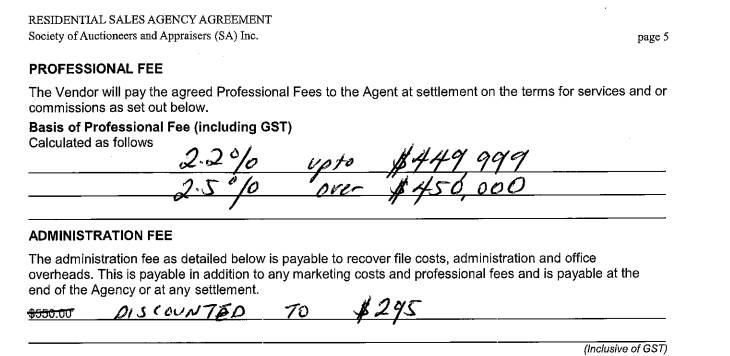
What a Known Franchise Quoted
- Commission (2.5% on $525k) $13,125
- Marketing (Ads, Floorplan, Sign) $2,694
- Legal Searches & Form 1 $2,000
- Admin fees (discounted) $295
What We Delivered
- Commission (1.5% Inc GST on $525k) $7,875
- Marketing (realestate.com.au / Domain) $1,400
- Legal Searches & Form 1 $800
- Admin fees $0
Client's Total Saving: $7,744 (Inc GST) ✓
This is not a commission comparison. It is a total cost of selling comparison — which is the number that actually matters. The real question is: how much do you keep after everything is paid.
So what does this look like on a typical Gawler home today?
Here is how the numbers stack up on today's average Gawler home value ($700,000). We compare a typical franchise fee structure (2.5% + GST = 2.75%) against our 1.5% Inc GST benchmark. Our commission may be lower depending on the property and sale price.
Detailed Cost Comparison — $700,000 Home
| Item / Service | Typical Franchise (2.5% + GST = 2.75%) | Gawler East RE (1.5% Inc GST) |
|---|---|---|
| Commission (on $700k) | $19,250 | $10,500 |
| Ad Writing | $210+ | ✓ Included |
| Floorplan & Signboard | $255+ | ✓ Included |
| Brochures | $84+ | ✓ Included |
| Legal Searches & Form 1 | ~$2,000 | $800 |
| Marketing (Portals) | ~$1,400 | ~$1,400 |
| Admin / Establishment Fees | $550 – $745 | $0 |
| Total Projected Cost | ~$24,000+ | ~$12,700 |
Projected Total Saving: $11,000+ (Inc GST) ✓
⚠️ The Hidden Costs Most Sellers Don't Expect
Many agents focus only on their commission rate — but the real cost of selling often comes from the additional fees that are easy to miss upfront.
These can include brochures, signboards, ad writing, admin or establishment fees, and higher legal or Form 1 search costs.
Our model keeps the total cost of selling clear and transparent: $800 Inc GST for legal searches & Form 1, $0 admin fees, and key campaign items like brochures, signboards, and ad writing included.
These numbers are real, and they matter. But the larger point is that every cost and every inclusion was explained upfront, and the homeowner understood exactly what they were paying for before they made a decision. That's the way I believe selling a home should work.
Does A Lower Real Estate Commission Mean Less Service?
One of the biggest misconceptions in real estate is that every low-commission agency operates in the same way. They don't. Just as two agents charging the same commission can deliver completely different experiences, two agents charging lower commissions can also operate under completely different business models. Understanding those differences is far more valuable than simply comparing percentages.
Principal-Led Independent Agencies
This is the model I chose for Gawler East Real Estate. The person you meet is the person who manages your sale. The person who gives you the appraisal attends the open inspections, negotiates with buyers and guides your sale through to settlement. There are no franchise fees. No head-office structure. No handovers to junior staff. I believe homeowners deserve to deal directly with the person they've chosen to trust with one of their biggest financial decisions.
High-Volume Real Estate Agencies
Some agencies offer lower commissions by managing a much higher number of listings at the same time. There's nothing inherently wrong with that approach. But it's worth asking how many properties your agent is managing and who will actually be looking after your sale once you've signed the agreement. Sometimes the lowest commission can also mean less individual attention. Sometimes it doesn't. The important thing is to ask the question.
Flat-Fee And DIY Selling Platforms
These services can absolutely reduce selling costs. For some homeowners they may even be the right choice. The trade-off is usually the level of professional support provided during pricing, buyer management and negotiation. In South Australia there's also another consideration: the level of exposure your property receives on the major property portals. Some DIY and non-franchised platforms offer cheaper advertising packages, but they may not provide access to the same listing levels and exposure available through an agent's advertising package on realestate.com.au. That doesn't automatically make one option better than another. It simply means it's important to understand what you're receiving before comparing costs.
The Better Question To Ask
Instead of asking: "What's your commission?"
"Who's actually going to manage my sale from beginning to end, and why should I trust them with one of the biggest financial decisions I'll ever make?"
Because once you know the answer to that question, the commission usually makes a lot more sense.
Parting Thoughts
If nothing else, I hope this page has changed the way you think about choosing a real estate agent. Most homeowners only sell a handful of properties in their lifetime. That's why it's completely understandable to compare the things that are easiest to measure—commission percentages, appraisal figures and marketing costs. But the decisions that usually have the greatest influence on the final outcome are rarely the easiest ones to compare. They're the judgement calls. The preparation. The conversations. The experience. The hundreds of small decisions that happen behind the scenes long before a sale reaches settlement. If this page has helped you understand that a little better, then it's already achieved exactly what I hoped it would.
If you'd like to explore these topics in more detail, you might find these pages helpful.
Selling your home from start to finish
If you're looking for a complete overview of the selling process—from deciding whether now is the right time to sell through to preparing your home, marketing it, negotiating with buyers and reaching settlement—my Sell My House page brings the entire journey together in one place.
Continue reading: Sell My House →How I build an evidence-based appraisal
If you're interested in how I take comparable sales, current competition and local market evidence and turn them into a realistic pricing recommendation, my Property Pricing Framework explains the process step by step. It's the framework I use for every appraisal, and it's designed to replace guesswork with evidence.
Continue reading: Property Pricing Framework →Why pricing strategy matters more than the price itself
One of the most important ideas we've touched on throughout this page is that pricing isn't just about arriving at a number—it's about positioning your property correctly from the very beginning. My Property Pricing Strategy page explores this in much greater detail, including the Freshness Window, buyer psychology, why the first 14–21 days are so important, and how different pricing approaches can influence your final result.
Continue reading: Property Pricing Strategy →People rarely regret understanding more before making an important decision.
They often regret making the decision before they truly understood it.
Local Market Perspective — Gawler and the Northern Adelaide Corridor
Andrew McKiggan is the principal and sole licensed agent of Gawler East Real Estate (RLA 248695), an independent residential agency based at 1 Lewis Ave, Gawler East SA 5118. Andrew sells residential property across the Gawler district and northern Adelaide corridor at 1.5% commission Inc GST or lower — verified through the Consumer and Business Services public register at CBS South Australia.
The commission and fee structures outlined on this page apply nationally, but what they mean in real dollars for sellers in this district is worth understanding directly. At the current median sale price across the Gawler district, the difference between a 2.75% franchise commission and Andrew's 1.5% rate is approximately $8,750 in commission alone — before marketing cost differences and the $0 administrative fee structure are factored in.
In this market, that difference matters more than it might in higher-price brackets. Sellers in the Gawler district are typically not selling investment portfolios — they are selling the family home they have lived in for a decade or more. The $9,000 to $11,000 total cost saving is not an abstract figure. It is the difference between what they keep and what they hand over at settlement.
What that saving does not mean is a reduced campaign. Every listing is handled through the same principal-led approach, with professional marketing, evidence-based pricing, buyer management and negotiation tailored to the property — regardless of whether the property sells for $550,000 or $900,000.
If you are considering selling in Gawler or the surrounding suburbs and want to understand the total cost of selling at 1.5% versus the franchise alternative, the next step is a straightforward conversation. Contact one of the real estate agents Gawler vendors trust for transparent fee structures and honest advice.
Call 0493 539 067 or email enquiries@gawlereastrealestate.au .
Commission is not the most important number in a property sale. The most important number is what you keep after every cost has been paid — and that figure is determined by the price your property achieves, the costs deducted from it at settlement, and the quality of the strategy that produced the result.
A lower commission rate that comes with a higher sale price and lower total costs is not a trade-off. It is a better outcome by every measure.
The percentage is not the cost.
The settlement statement is.
The question is never what the agent charges — it is what you
keep after everything is paid.
The sellers who get this right are the ones who asked the right questions before they signed — not the ones who accepted the first rate quoted or chose the agent who told them the most encouraging number.
