
Last Updated on January 15, 2026 by Andrew Mckiggan
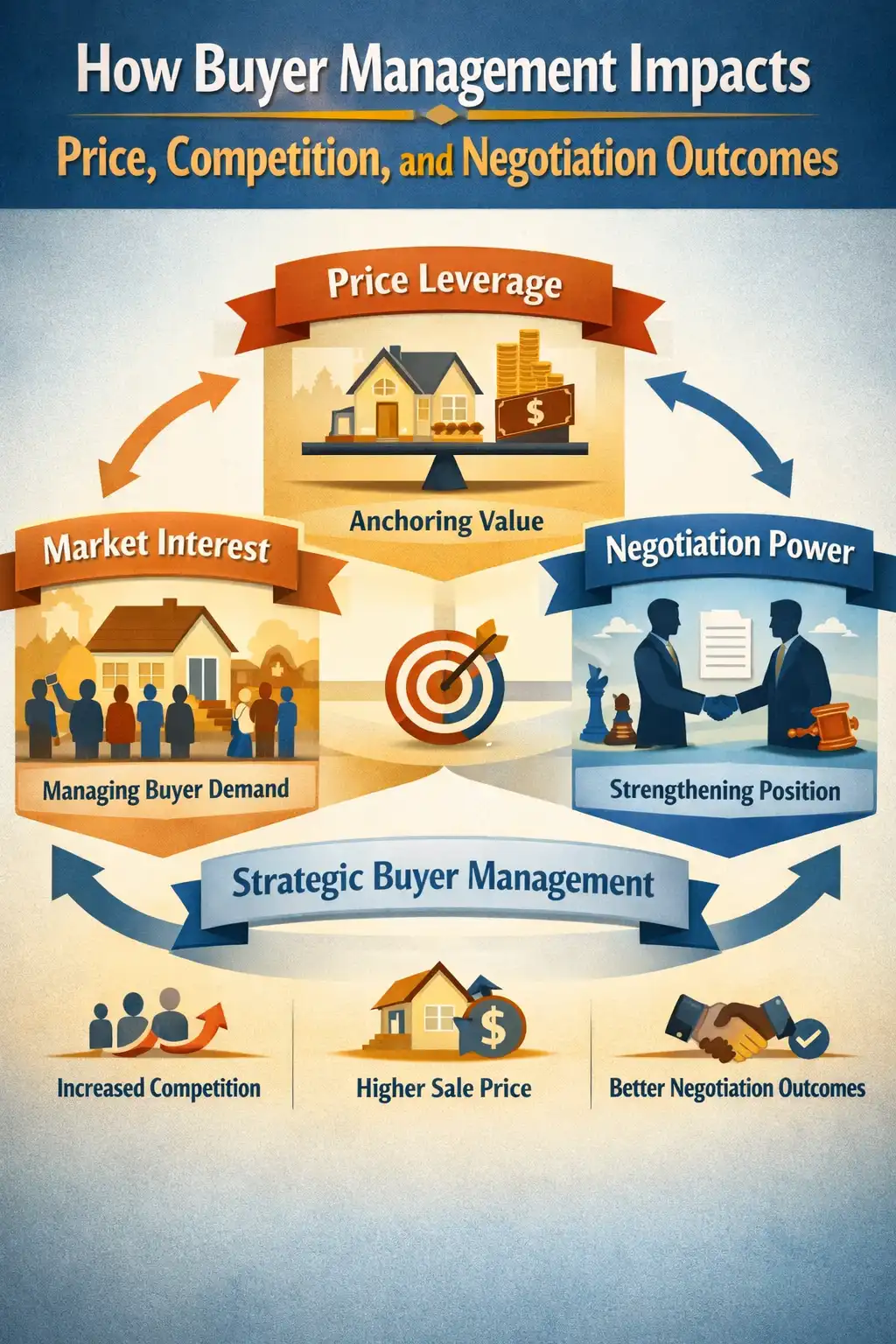
Buyer management plays a critical role in how a property sale unfolds. While pricing and marketing often receive the most attention, the way buyers are handled throughout a campaign can directly influence competition levels, negotiation leverage, and the final sale outcome.
This page explains how buyer management works in practice, why it matters beyond inspections and enquiries, and how different approaches can affect price, momentum, and negotiation outcomes during a property sale.
What Buyer Management Actually Covers
Buyer management is not a single action. It is the ongoing process of managing buyer interest, communication, and expectations throughout a sales campaign.
It typically includes:
- Managing enquiry flow and response timing
- Coordinating inspections and access
- Communicating price expectations consistently
- Following up buyer interest and feedback
- Managing competing interest
- Structuring negotiation timing and responses
Each of these elements influences how buyers perceive both the property and the opportunity to secure it.
Important Context
Buyer management is not about pressure or persuasion.
It is about maintaining clarity, consistency, and control throughout the campaign.
How Buyer Management Shapes Competition
Buyer competition does not occur automatically. It is shaped by how information, access, and expectations are managed.
Key factors include:
- Response timing — slow or inconsistent follow-up can reduce engagement
- Information consistency — mixed messages undermine confidence
- Inspection structure — isolated inspections limit competitive awareness
- Expectation setting — unclear positioning creates hesitation
When buyer interest is handled deliberately, buyers are more likely to remain engaged and responsive as the campaign progresses.
Buyer Perception and Pricing Outcomes

Pricing outcomes are influenced not only by the advertised figure or method of sale, but by how buyers interpret value and opportunity.
Buyer management affects this through:
- How confidently the property is positioned
- How buyer feedback is interpreted and acted upon
- Whether pricing expectations evolve through competition or stall early
Poor buyer handling can unintentionally anchor expectations too low, even when demand exists.
Pricing Insight
Pricing pressure often appears before negotiation begins, not during it.
Buyer handling plays a major role in whether that pressure builds or dissipates.
Negotiation Leverage Is Built Before Offers Appear
Negotiation does not start when an offer is submitted. It is shaped by everything that happens beforehand.
Buyer management contributes to negotiation leverage by:
- Maintaining multiple engaged buyers
- Avoiding premature disclosure of seller flexibility
- Managing silence and response timing
- Preserving optionality during decision points
When buyers sense disorganisation or uncertainty, negotiation leverage can weaken well before formal discussions begin.
What This Looks Like in Practice
The effects of buyer management are often subtle and occur early in a campaign, making them easy to miss from a seller’s perspective.
A practical breakdown of how negotiation leverage can be lost before offers appear — through enquiry handling, inspection structure, and early buyer conversations — is outlined in this case study:
👉 When Buyer Management Breaks Down: How Negotiation Leverage Is Lost Before Offers Appear
(This example is provided for context and illustration only, not as service promotion.)
Common Buyer Management Mistakes
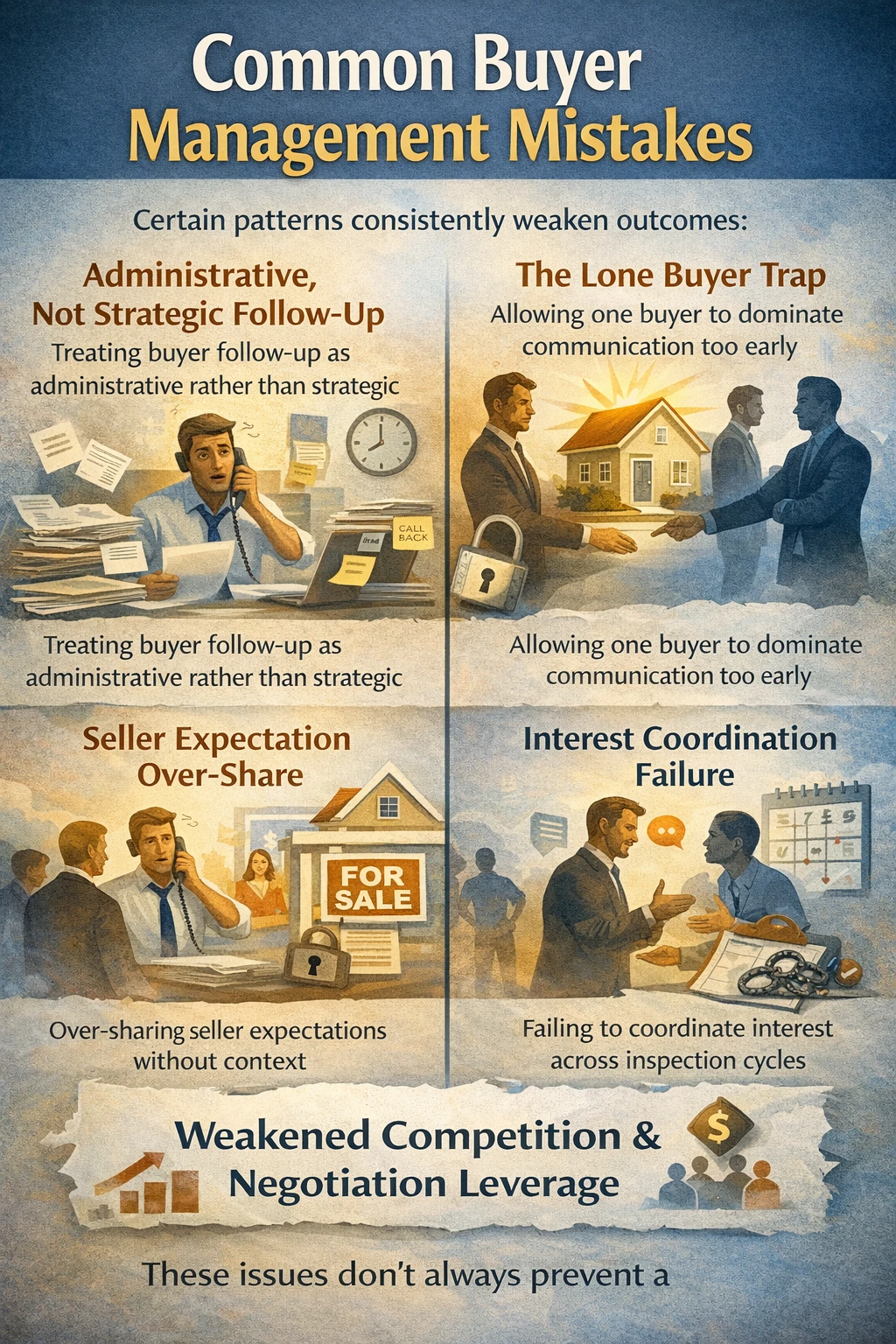
Certain patterns consistently weaken outcomes:
- Treating buyer follow-up as administrative rather than strategic
- Allowing one buyer to dominate communication too early
- Over-sharing seller expectations without context
- Failing to coordinate interest across inspection cycles
These issues don’t always prevent a sale, but they often reduce competition and apply downward pressure during negotiation.
How Buyer Management Interacts With Sales Method
Buyer management works alongside the chosen method of sale.
For example:
- Auction campaigns rely on structured buyer engagement to build momentum
- Private treaty campaigns depend on ongoing buyer qualification and follow-up to avoid stagnation
The same property can perform very differently depending on how buyer interaction is managed within the chosen structure.
When Buyer Management Becomes Outcome-Defining
In balanced or slower markets, buyer management often becomes the deciding factor between:
- One offer versus multiple
- Conditional versus cleaner terms
- Early negotiation versus extended days on market
At this stage of a campaign, subtle differences in handling can materially affect the final result.
How Buyer Management Fits Into Broader Pricing Decisions
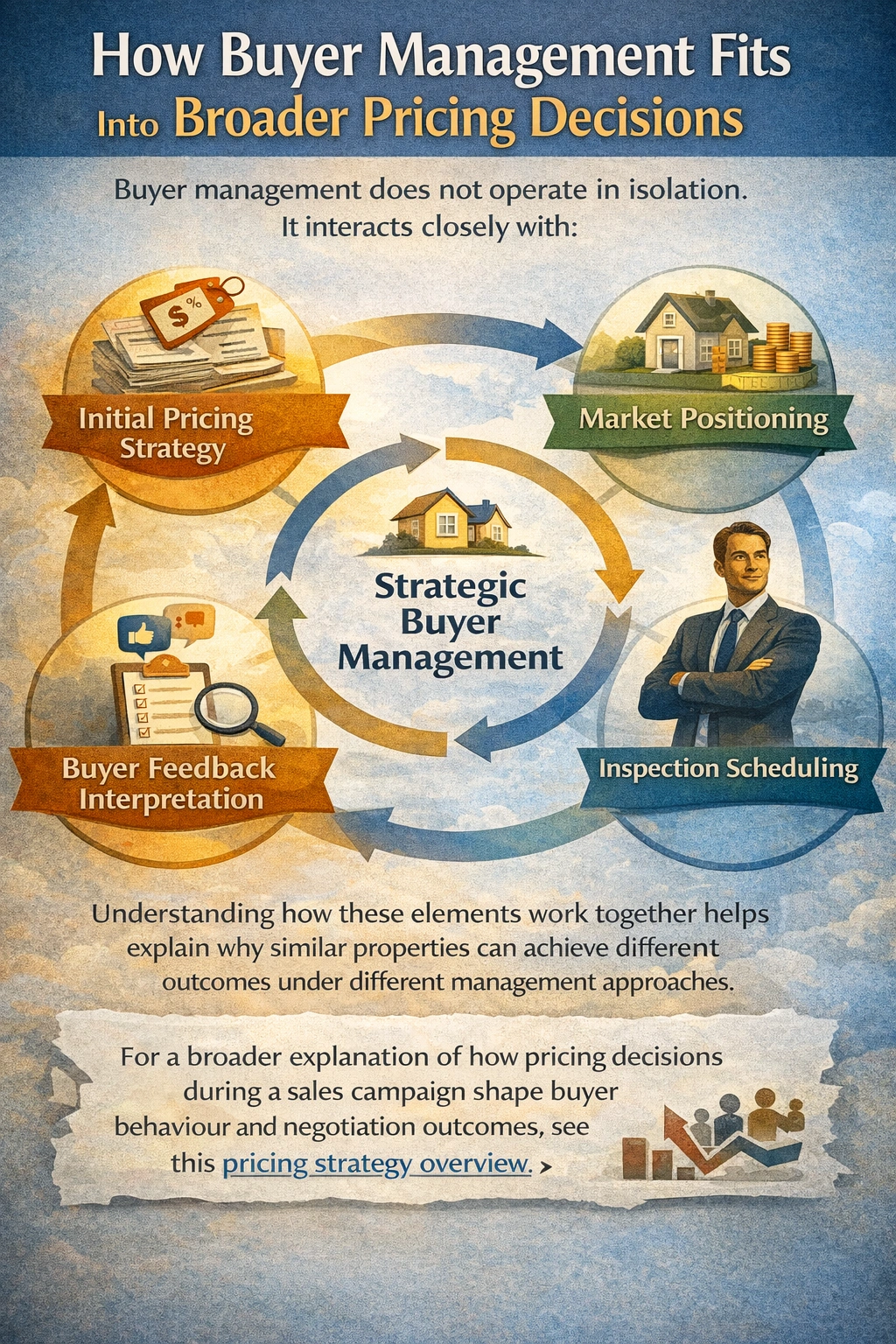
Buyer management does not operate in isolation. It interacts closely with:
- Initial pricing strategy
- Market positioning
- Inspection scheduling
- Buyer feedback interpretation
Understanding how these elements work together helps explain why similar properties can achieve different outcomes under different management approaches.
For a broader explanation of how pricing decisions during a sales campaign shape buyer behaviour and negotiation outcomes, see this pricing strategy overview.
Advanced Buyer Management & Pricing Dynamics Questions Answered
How can buyer management unintentionally reset a buyer’s internal price ceiling?
Buyers form an internal price ceiling early, often before formal negotiations begin. Inconsistent messaging, hesitation when discussing price, or over-explaining seller context can signal uncertainty. Once a buyer’s internal ceiling is set, subsequent competition or data is filtered through that anchor, making upward movement difficult even when demand exists.
Why does early buyer feedback sometimes misrepresent true market response?
Early feedback is often skewed toward buyers with higher negotiation leverage, longer timeframes, or stronger price sensitivity. Without contextual filtering, this feedback can be mistaken for broad market resistance, when it may only reflect a specific buyer profile rather than overall demand conditions.
How does buyer management influence perceived scarcity without changing price or marketing?
Scarcity is perceived through access, timing, and information visibility. Coordinated inspections, consistent follow-up, and controlled disclosure of interest levels can make demand observable without explicit statements. When scarcity is visible, buyers reassess risk and adjust behaviour independently of price.
At what point does responding too quickly weaken negotiation leverage?
Immediate responses can sometimes signal availability rather than professionalism. In negotiation phases, response timing can communicate urgency or flexibility unintentionally. Strategic pacing — without delaying unreasonably — helps maintain balance and prevents buyers from testing downward pressure prematurely.
Why do sellers often feel negotiations ‘turn’ suddenly, even when nothing changed publicly?
Negotiation shifts often occur due to private buyer interpretations rather than public events. A single conversation, delayed response, or misinterpreted comment can alter a buyer’s assessment of leverage. These shifts are rarely visible to sellers until offers are presented.
How does buyer management interact with days on market metrics?
Days on market is not purely a time-based metric; it reflects buyer perception over time. As a campaign progresses, buyer management decisions influence whether time reinforces confidence (through ongoing interest) or creates assumptions of resistance. The same number of days can carry very different meanings depending on how interest is managed.
Why can revealing ‘honest’ seller flexibility backfire in negotiations?
Transparency without context can remove uncertainty that benefits the seller. When buyers believe flexibility exists, they adjust their offer strategy accordingly, often anchoring lower. Effective buyer management separates honesty from unnecessary disclosure, preserving negotiation range while remaining accurate.
How does buyer management affect conditional versus clean offers?
Buyers assess risk based on perceived competition. When competition is visible, buyers are more likely to strengthen terms to differentiate themselves. Poor buyer coordination can lead buyers to assume exclusivity, increasing conditionality and reducing urgency to present strong terms.
Can buyer management compensate for pricing that is slightly misaligned?
To a degree, yes. While buyer management cannot fix fundamental mispricing, deliberate handling of interest, feedback, and access can prevent immediate downward anchoring. This can preserve optionality while pricing strategy is refined, rather than forcing early concessions.
Why do some campaigns feel ‘busy’ but still result in weak negotiation outcomes?
Volume of enquiry does not equal competitive tension. Without coordination, buyers experience interest in isolation rather than collectively. Buyer management determines whether activity translates into leverage or remains fragmented and non-competitive.
How do buyer management decisions differ between evaluation and negotiation phases?
During evaluation, buyer management focuses on information clarity and expectation setting. During negotiation, the emphasis shifts to timing, restraint, and optionality. Applying the same communication style across both phases can unintentionally weaken leverage as the campaign progresses.
Applying Buyer Management in a Local Sales Context
Understanding how buyer management affects price, competition, and negotiation outcomes can help sellers make more informed decisions about how their sale is handled.
For those who want to see how buyer interaction, negotiation structure, and pricing considerations are managed within a local sales campaign, an overview of real estate agent services and process is available here:
👉 Real Estate Agent Services & Local Expertise
If you’d prefer to discuss these considerations directly rather than reading through the detail, information is also available by speaking with Andrew McKiggan by phone on 0493 539 067, or via email at enquiries@gawlereastrealestate.au

