
Last Updated on January 21, 2026 by Andrew Mckiggan
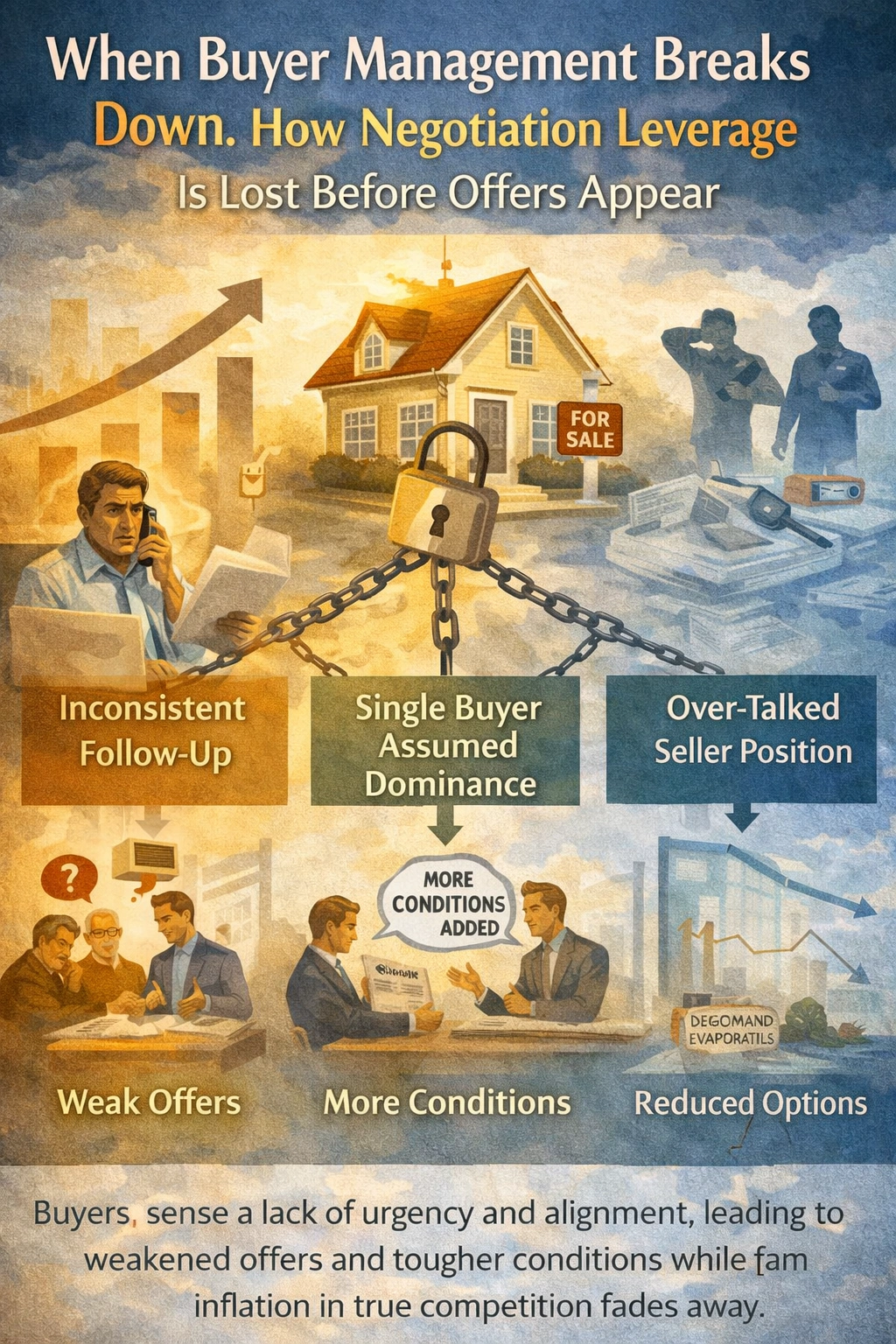
In many property sales, negotiation outcomes are decided well before a formal offer is submitted. While sellers often focus on pricing, presentation, or marketing reach, the way buyer interest is managed during the early stages of a campaign can quietly shape leverage, competition, and final outcomes.
This case study examines what typically happens when buyer management becomes passive rather than deliberate, and how negotiation leverage can erode before sellers realise it.
Case Context: A Common Campaign Pattern
This analysis reflects a recurring pattern observed across residential sales campaigns in balanced or softer markets.
The property receives:
- Initial enquiry following launch
- A small group of inspections
- Early verbal interest from one buyer
- Limited follow-up with other parties
On the surface, nothing appears wrong. The campaign is active, inspections are occurring, and at least one buyer is engaged.
The issue lies beneath the surface.
Where Buyer Management Starts to Fail
Buyer management issues rarely stem from a single mistake. They usually emerge through a series of small decisions that, combined, weaken the seller’s position.
1. Enquiry Handling Becomes Administrative
Early enquiries are responded to, but not qualified.
Indicators include:
- Generic replies
- Limited questioning about buyer intent or timeframe
- No distinction between casual interest and capacity-ready buyers
At this stage, buyer interest is recorded but not shaped.
2. Inspections Are Treated as Isolated Events
Inspections are scheduled individually or sporadically.
As a result:
- Buyers do not see competing interest
- Inspection activity feels quiet, even if multiple enquiries exist
- Momentum remains invisible
Without visible demand, buyers assess risk conservatively.
Case Observation
Buyer competition is influenced as much by what buyers observe as by actual demand.
The Early Loss of Negotiation Leverage

Negotiation leverage is often lost before the seller realises a negotiation has begun.
This typically occurs when:
- One buyer receives disproportionate attention
- Seller flexibility is disclosed informally
- Follow-up with other interested parties slows
The result is a single-buyer dynamic, even if broader interest existed initially.
This is sometimes referred to as the “lone buyer trap” — where the presence of one engaged party unintentionally discourages competition rather than encouraging it.
Price Anchoring Before the First Offer
In many campaigns, the buyer’s price expectation becomes anchored long before an offer is submitted.
This anchoring can occur through:
- Hesitation or inconsistency in price discussions
- Over-explaining seller circumstances
- Reactive responses to early feedback
Once anchored, buyers tend to negotiate down from that reference point, rather than reassessing value based on competition.
Case Insight
Price anchoring often occurs conversationally — not formally — and is difficult to reverse once established.
Passive vs Deliberate Buyer Management
The difference between passive administration and deliberate buyer management becomes clear when outcomes are compared.
| Area | Passive Handling | Deliberate Handling |
|---|---|---|
| Enquiries | Logged and replied to | Qualified and prioritised |
| Inspections | One-off, private | Coordinated for visibility |
| Buyer feedback | Passed on | Interpreted and acted upon |
| Negotiation timing | Reactive | Controlled |
| Leverage | Erodes quietly | Preserved deliberately |
These differences are rarely visible to sellers during the campaign — only in the final negotiation.
The Compounding Effect Over Time
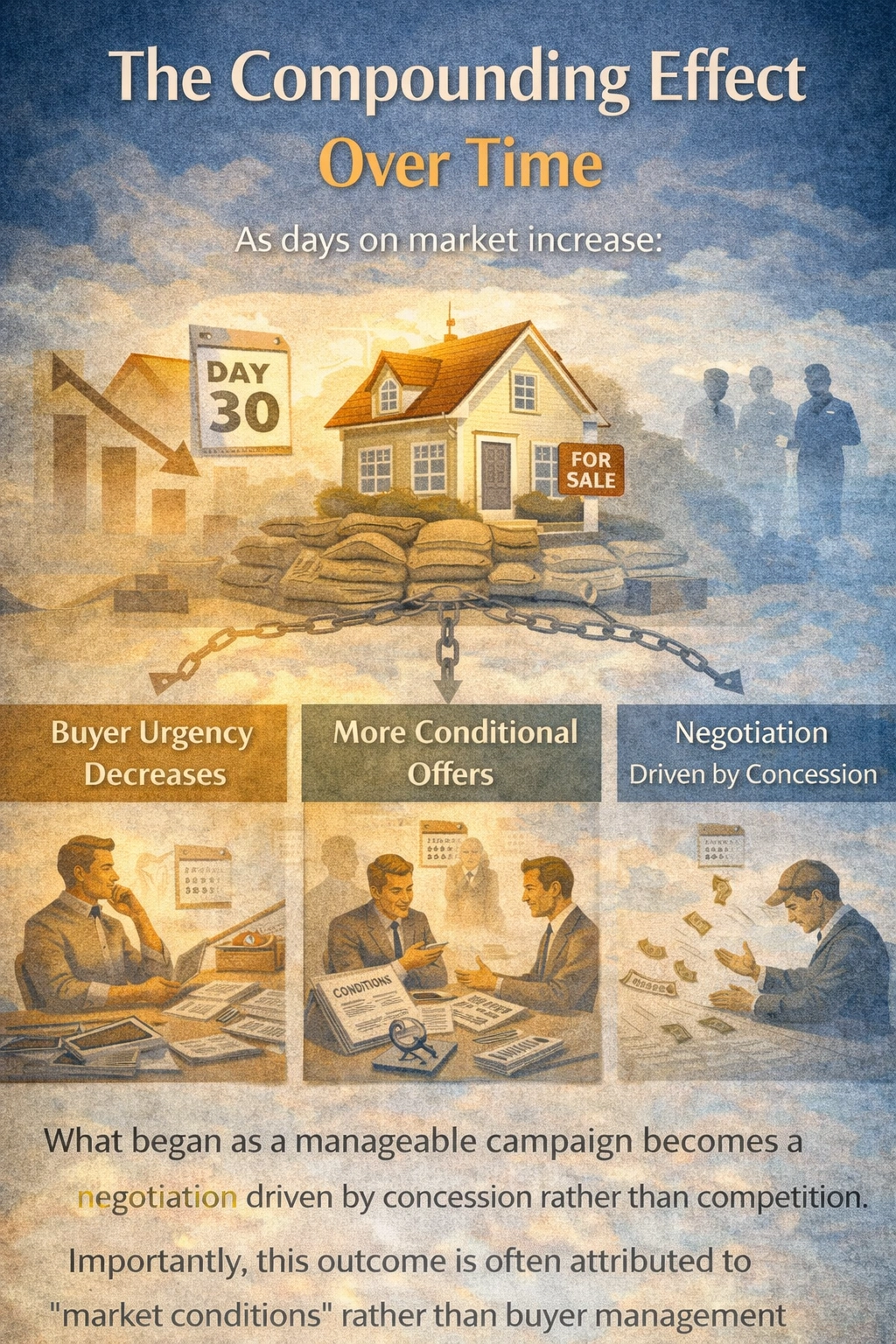
As days on market increase:
- Buyer urgency decreases
- Sellers receive more conditional offers
- Negotiation pressure shifts
What began as a manageable campaign becomes a negotiation driven by concession rather than competition.
Importantly, this outcome is often attributed to “market conditions” rather than buyer management decisions made earlier.
Why Sellers Often Miss the Warning Signs
Sellers are rarely aware of these dynamics because:
- Buyer conversations happen privately
- Feedback is filtered or summarised
- The campaign still appears “active”
By the time negotiation begins, leverage has already been reshaped.
How This Case Fits Into Broader Sale Strategy
Buyer management does not operate independently. It interacts closely with:
- Pricing strategy
- Method of sale
- Inspection scheduling
- Communication discipline
Understanding these interactions helps explain why similar properties can experience very different negotiation outcomes.
For a broader explanation of how pricing decisions influence buyer behaviour and negotiation context across a sales campaign, see this overview of pricing strategy considerations.
Purpose of This Case Study
This case study is intended to illustrate mechanics, not promote services.
It highlights:
- How leverage is built or lost
- Why early interactions matter
- Where negotiation outcomes are shaped
Understanding these patterns allows sellers to better evaluate advice, strategy, and process during a sales campaign.

