
Last Updated on February 6, 2026 by Andrew Mckiggan
Quick Summary: Agent Costs at a Glance
What is the average commission in SA?
In South Australia, real estate fees typically range between 2.0% and 2.75% (Inc GST) of the final sale price.
What is the Gawler East Real Estate rate?
We operate on a streamlined, principal-led model with a competitive rate of 1.5% (Inc GST).
Are there other costs?
Yes. Marketing and statutory compliance costs (Form 1) are charged at cost. Because we are independent, our compliance fees are often significantly lower than franchise averages.
Key Takeaway for Sellers: While industry standards hover around 2.75% (Inc GST), significant savings are available through independent, principal-led agencies.
Real Estate Agent Costs in Australia

When selling a home, one of the first questions homeowners ask is how much real estate agents cost — and whether the fee is actually worth it.
This article explains how much a real estate agent charges and how commission works in Australia.
More importantly, it explores the difference between agent cost and real value, particularly when you are selling one of the largest assets you will ever own.
This guide is written from the perspective of licensed real estate practice in South Australia and reflects practical experience gained from handling residential property sales, negotiations, and compliance processes across different market conditions.
How Much Do Real Estate Agents Cost in Australia?
In Australia, real estate agent costs are typically based on commission rather than a fixed price.
According to industry data from sources like OpenAgent and Canstar, most residential sales in South Australia fall within the following range:
2.0% to 2.75% (Inc GST) of the final sale price.
There is no legislated “standard” commission, and fees vary depending on location and agency structure.
However, Gawler East Real Estate operates differently. By running a streamlined, principal-led model, we are able to offer a competitive rate of 1.5% (Inc GST).
Note: Fees are tailored to each property; contact Andrew for a personalized quote.
How Much Does a Real Estate Agent Charge Per Sale?
A common follow-up question is how much a real estate agent makes per sale. To understand the real cost, we must look at the full figure including tax.
Based on the typical industry benchmark of 2.75% (Inc GST), gross commission costs look like this:
- A $600,000 sale at 2.75% = $16,500 (Inc GST)
- An $800,000 sale at 2.75% = $22,000 (Inc GST)
- A $1,000,000 sale at 2.75% = $27,500 (Inc GST)
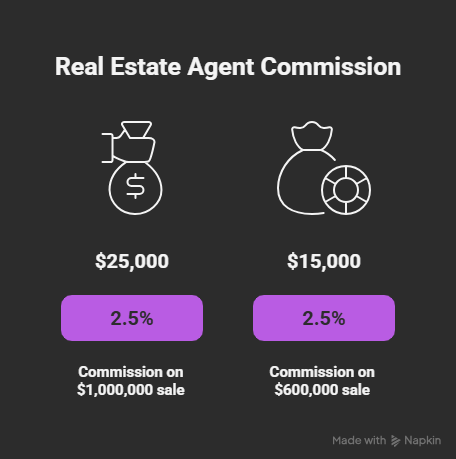
However, this is not what the agent personally earns.
Commission is usually divided between the franchise, the principal, the individual agent, and marketing expenses.
In many franchise models, the agent’s personal share is only around 30–40% of the gross commission. This is why some fees are higher—to cover the overheads of the agency structure, rather than paying for direct value.
Cost vs Value: Why Commission Alone Is the Wrong Comparison
Many sellers compare agents purely on percentage.
While understandable, this approach ignores a critical factor: outcome.
A lower commission does not automatically mean better value, just as a higher commission does not guarantee a better result.
What matters is whether the agent’s strategy, negotiation skill, and execution produce a stronger final outcome after fees.
In practice, a skilled agent can often recover their entire commission — and more — through price improvement and buyer competition.
The Hidden Risk Sellers Often Overlook
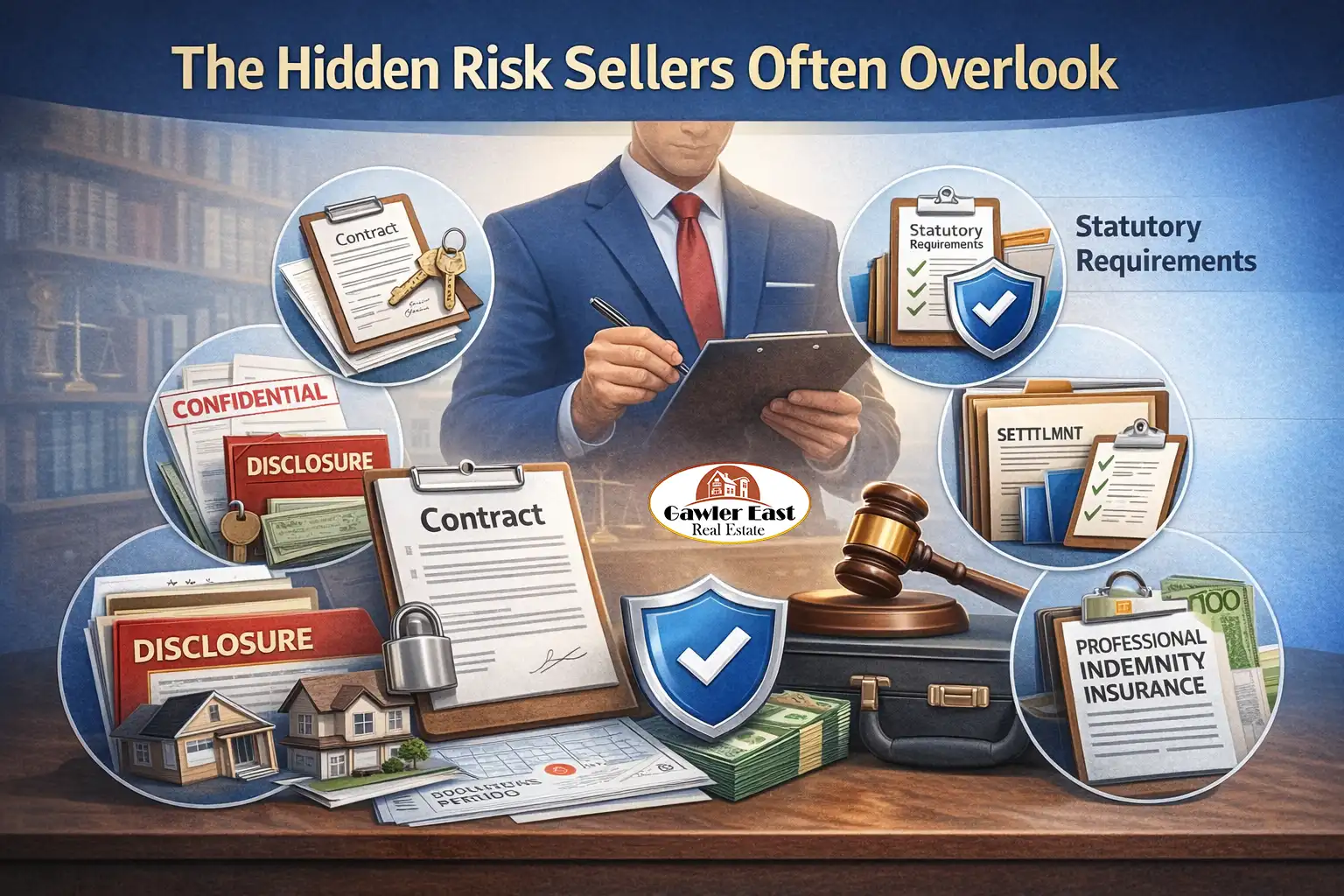
Selling a property is not just a financial transaction. It is the legal transfer of a high-value asset.
Contracts, disclosures, cooling-off periods, statutory requirements, and settlement conditions must all be handled correctly. Errors can lead to disputes, delays, or legal exposure after settlement.
In Australia, licensed real estate agents operate under state legislation and professional conduct requirements, which is why compliance, disclosure accuracy, and risk management form a core part of an agent’s role.
These obligations are not occasional tasks — they are part of an agent’s day-to-day workflow and are managed repeatedly across multiple transactions each month.
In addition, licensed agents carry professional indemnity insurance, providing an extra layer of protection if something goes wrong — a safeguard that private sellers do not have.
When assessing how much real estate agents cost, this risk reduction forms part of the value being paid for.
Emotional Distance: An Underestimated Advantage
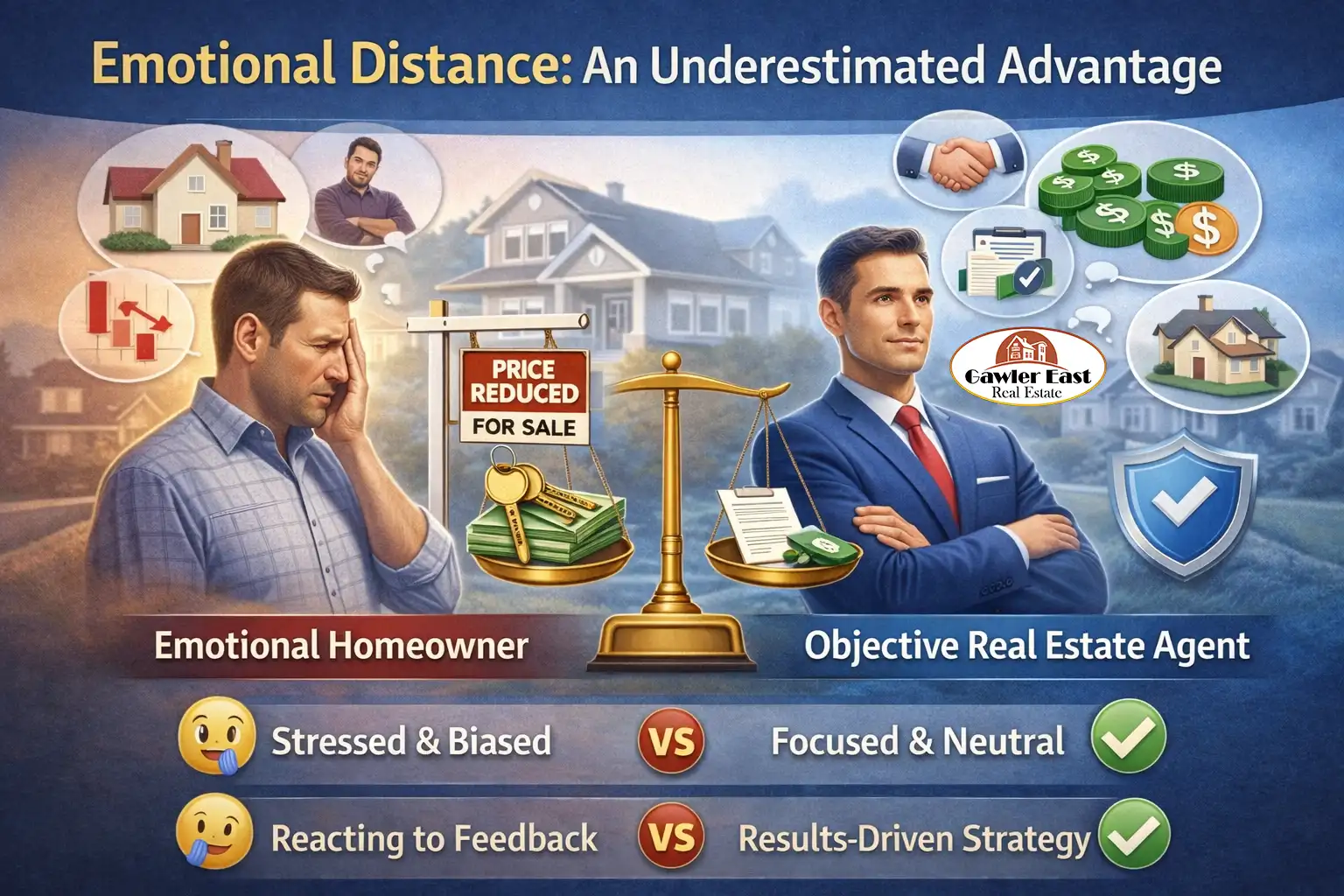
Selling a home is emotional.
Homeowners are naturally attached to their property, which can influence pricing decisions, negotiation responses, and reactions to buyer feedback.
A real estate agent provides something sellers cannot easily give themselves: emotional detachment.
Because agents are not personally connected to the property, they can negotiate objectively, manage multiple buyers without pressure, and make strategic decisions without emotion influencing outcomes.
This emotional distance often leads to stronger negotiation and better financial results, particularly in competitive or high-stress situations.
Does Paying More Commission Produce Better Results?
A key concern for sellers is whether paying more commission leads to a better outcome.
The evidence suggests that commission level alone does not determine success.
Higher commission does not guarantee better marketing, stronger negotiation, or higher sale prices.
What matters more is how buyer competition is created, how offers are managed, how pricing strategy is executed, and how negotiations are handled.
This is why cost should be assessed alongside strategy, experience, and execution — not just the headline percentage.
Seller experience varies widely depending on commission structure, pricing strategy, and negotiation approach. Independent seller feedback and local case studies consistently show that outcomes are influenced less by the headline commission percentage and more by how effectively an agent manages buyer competition, pricing expectations, and negotiations. In practice, sellers report that a clear strategy, realistic pricing, and strong negotiation skills often have a greater impact on final results than commission alone.
A Real-World Example of Cost vs Outcome
For sellers who want to see how commission structure, total costs, and negotiation outcomes can differ in practice, a real-world local example provides useful context.
This case study breaks down commission differences, marketing expenses, and negotiation results from an actual transaction, illustrating why outcome matters more than percentage alone.
Location Still Matters When Evaluating Agent Value
Commission structures and selling strategies are influenced by local market conditions.
Understanding buyer demand, pricing behaviour, and negotiation patterns plays a significant role in determining whether an agent’s cost delivers real value.
This is why sellers benefit from understanding local real estate conditions in Gawler SA, particularly when comparing agents operating within the same geographic area.
In South Australia, independent industry analysis published by OpenAgent shows that commission rates vary by location. Metro areas often see lower average percentages, while regional areas often trend higher (up to 3%). However, Gawler East Real Estate challenges this trend by offering a competitive 1.5% (Inc GST) rate locally. Importantly, this data reinforces that commission is negotiable and heavily influenced by supply and demand rather than a fixed standard.
Source: OpenAgent – What commission should you pay your South Australian real estate agent?
👉 Link “OpenAgent – What commission should you pay your South Australian real estate agent?”
Final Perspective: What Are You Really Paying For?
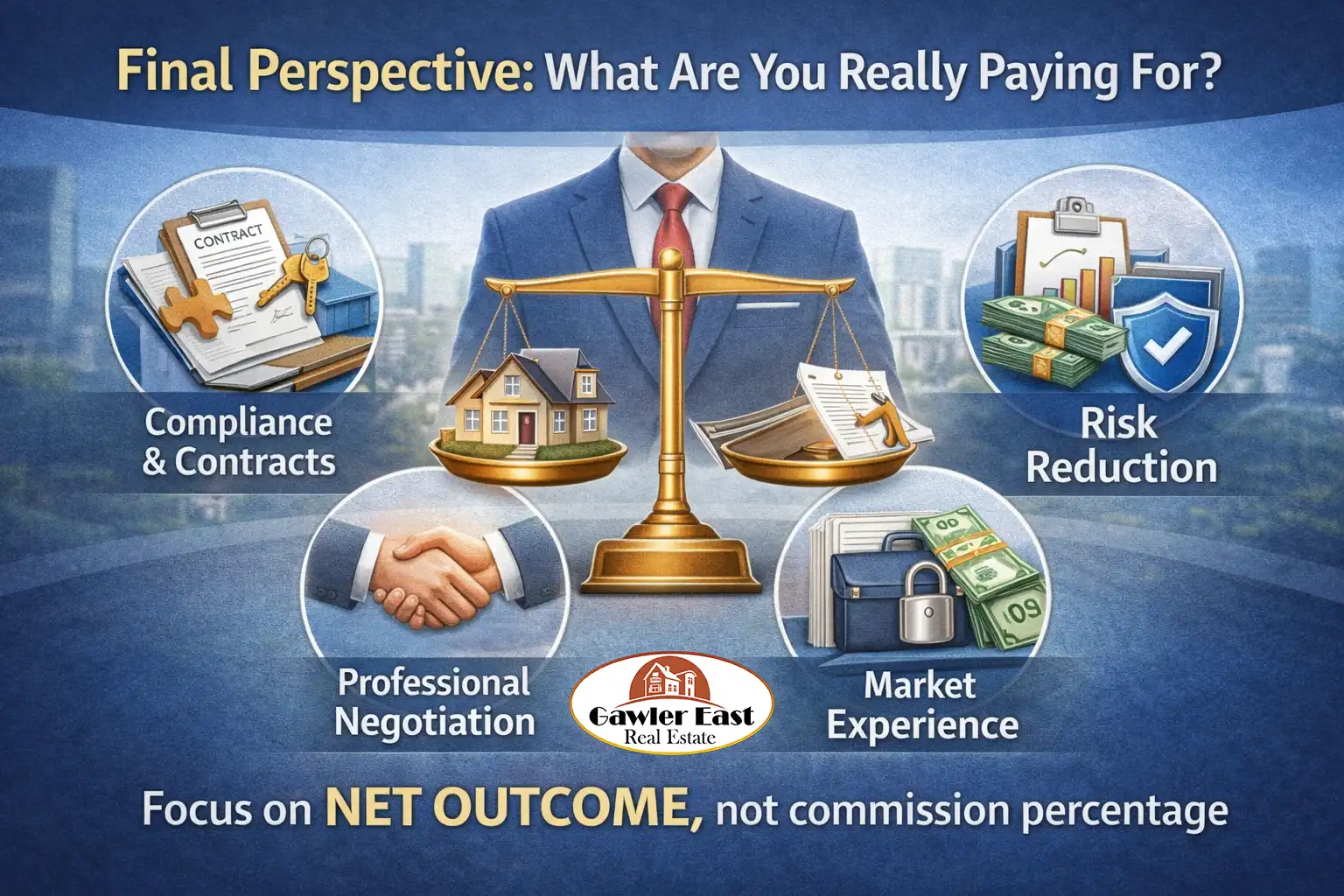
When viewed holistically, real estate agent cost is not simply a fee for selling a house.
It represents payment for compliance and contract management, professional negotiation without emotional bias, and risk reduction on a high-value asset.
The cheapest option is not automatically the best — and the most expensive option is not automatically superior.
The smartest approach is to focus on net outcome, not just commission percentage.
Individual outcomes vary depending on market conditions, pricing strategy, and execution. Commission structures should always be assessed in the context of the specific property and local market.
This article is intended as general information only and does not replace independent legal, financial, or property advice specific to your circumstances.
Frequently Asked Questions About Real Estate Agent Costs in Australia
How much do real estate agents cost in Australia?
n Australia, real estate agent costs are typically charged as a commission based on the final sale price. Most residential properties fall within a range of approximately 2.0% to 2.5% plus GST, although commission is negotiable and varies by location, property value, and market conditions.
Do real estate agents keep the full commission?
No. The commission paid by the seller is usually shared between the agency, the individual agent, and operational costs such as marketing, administration, and compliance. In many cases, the agent’s personal share is around 30–40% of the gross commission.
Is a lower commission always better for sellers?
Not necessarily. A lower commission does not automatically produce a better outcome. What matters more is pricing strategy, negotiation skill, buyer competition, and how effectively the sale process is managed. In some cases, a skilled agent can recover their entire commission through stronger negotiation and sale outcomes.
Are real estate agent commissions negotiable?
Yes. There is no legislated standard commission rate in Australia. Commission is negotiable and often influenced by local market competition, property value, and the services included in the agency agreement.
Why do commission rates vary between locations?
Commission rates vary due to local market forces. Areas with higher agent competition and higher property values often see lower percentage rates, while regional or lower-value markets may attract higher commissions to cover operating costs.
What risks do sellers face without professional representation?
Selling a property involves legal compliance, disclosure obligations, contract management, and settlement processes. Errors can lead to disputes or legal exposure. Licensed real estate agents operate under state legislation and carry professional indemnity insurance, which provides an additional layer of protection for sellers.

