
Last Updated on June 30, 2026 by Andrew Mckiggan

Marketing a property is only half the battle. In the current Gawler and surrounding suburbs property market, getting buyers through the front door is often the easier part. Professional photography, online listings, and targeted advertising can generate strong interest — but interest alone does not guarantee a premium sale price.
The real work that determines whether you achieve an average result or an exceptional one happens behind closed doors. It comes down to negotiation strategy, buyer psychology, and how effectively your agent protects your position once offers begin.
⭐ KEY TAKEAWAYS
While marketing attracts potential buyers to a property, strategic negotiation by an experienced agent is what ultimately secures the premium sale price.
- Negotiation begins at the first inspection, not when the offer arrives
- Buyer psychology often matters more than marketing spend
- Strategic counter-offers protect your final sale result
- Sellers should always test their agent’s specific negotiation process before signing an agreement.
Why Beautiful Marketing Doesn’t Close Deals

Many agents are excellent presenters. They organise photography, launch listings, and run open inspections professionally. But presentation alone does not extract a buyer’s maximum budget.
Across Gawler and the surrounding suburbs, many campaigns produce one serious buyer and a small number of secondary parties. When that happens, price growth rarely occurs naturally — it must be professionally negotiated.
This is where the gap appears.
There is a significant difference between an agent who simply presents offers and one who strategically manages buyer psychology to improve the final price.
When there is only one highly motivated buyer, the agent’s negotiation skill often becomes the single biggest factor influencing your result.
This is also why correct market positioning matters from day one. If you want to understand how pricing and negotiation work together, see our guide on PROPERTY PRICING STRATEGY.
The Corporate Edge in Property Sales
True negotiation is not improvisation — it is a disciplined process.
Many agents learn negotiation reactively while working in residential sales. By contrast, Andrew McKiggan brings more than 25 years of high-value corporate negotiation experience from the technology sector into every property transaction across Gawler and nearby suburbs.
The same principles used in complex commercial negotiations apply directly to residential sales:
- strategic positioning
- controlled information flow
- price anchoring
- calibrated silence
- understanding motivation before responding
Property negotiation is rarely about talking more — it is about knowing what to say, when to say it, and when to pause.
This principal-led approach ensures buyers are managed directly, with no junior handovers and no diluted communication.
Reading the Buyer — The Silent Negotiation Most Sellers Never See
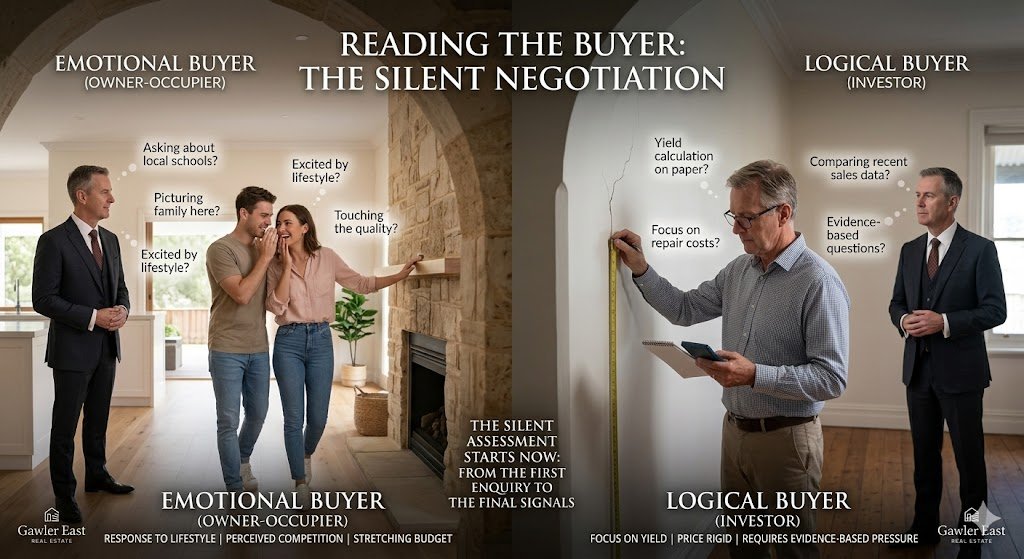
Negotiation does not start when the written offer arrives.
It begins at:
- the first enquiry
- the first inspection
- the follow-up conversations after opens
Experienced agents are constantly assessing buyer signals, including:
- the questions they ask
- how quickly they follow up
- emotional vs analytical language
- financing readiness
- urgency indicators
Emotional vs Logical Buyers
Not all buyers should be negotiated with the same strategy.
Emotional buyers (often owner-occupiers):
- respond strongly to lifestyle positioning
- are influenced by perceived competition
- may stretch beyond initial budgets
Logical buyers (often investors):
- focus heavily on yield and comparable sales
- tend to be more price rigid
- require evidence-based pressure
Treating both buyer types the same can quietly leave money on the table.
Managing the Counter-Offer (Without Losing the Buyer)
One of the most common mistakes in residential sales is the immediate response to an offer.
Fast replies can unintentionally signal:
- seller urgency
- weak competition
- negotiability in the wrong direction
A structured negotiation process often includes:
- controlled response timing
- calibrated counter positioning
- maintaining buyer engagement
- protecting seller leverage
The goal is never to “win the argument.”
The goal is to keep the buyer emotionally invested while methodically moving them upward.
The Legal Line in Real Estate Negotiation (What Sellers Should Know)
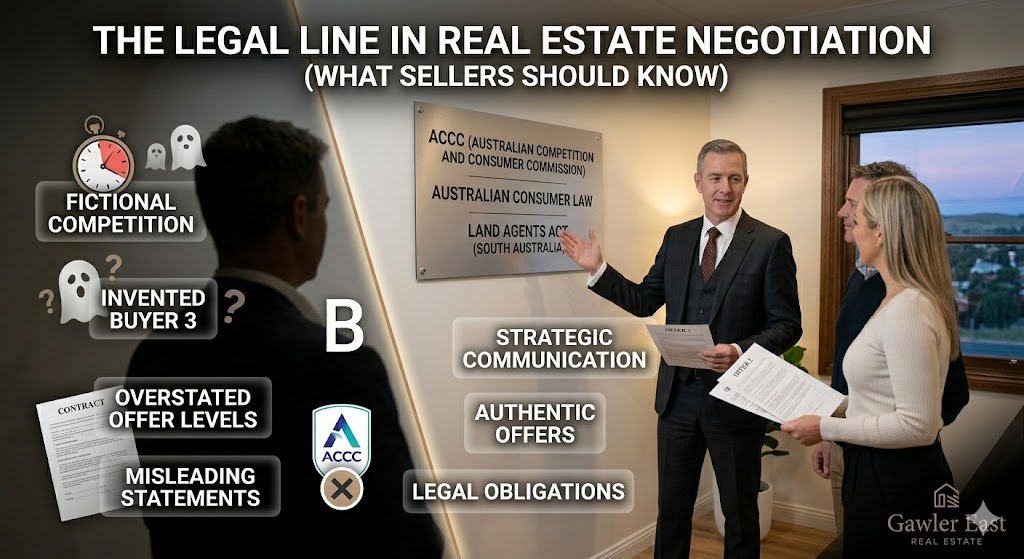
Strong negotiation does not mean misleading buyers.
In South Australia, agents must comply with strict obligations under the Land Agents Act and Australian Consumer Law. Professional negotiation is about strategic communication — not fabrication or pressure tactics.
The Australian Competition and Consumer Commission (ACCC) also makes clear that businesses must not engage in misleading or deceptive conduct when dealing with consumers.
A compliant, experienced agent may legitimately:
- communicate genuine competing interest
- present real offers
- explain the vendor’s expectations
- invite buyers to submit their strongest position
However, agents must not invent competing buyers or misrepresent offer levels.
If you want to better understand some of the behaviours sellers occasionally encounter in the marketplace, see our article on MISLEADING SALES TACTICS.
Seller Negotiation Checklist — Questions to Ask Before You Sign
Before appointing any agent in Gawler or the surrounding suburbs, sellers should test how the negotiation process will actually be handled.
Ask your prospective agent:
- Who conducts buyer negotiations — you or a junior staff member?
- What is your strategy if only one serious buyer emerges?
- How do you determine a buyer’s true budget ceiling?
- When do you recommend accepting versus countering?
- How do you prevent buyers from going cold during negotiations?
- What specific steps do you take after the first offer arrives?
If the answers sound vague or overly generic, the negotiation process may be more reactive than strategic.
Why Negotiation Strategy Matters in the Gawler Market
The Gawler and northern suburbs market can vary significantly from campaign to campaign. Some properties attract strong multi-buyer competition, while others rely heavily on precise buyer management.
In balanced or quieter conditions especially, negotiation expertise often becomes the deciding factor between meeting the market and outperforming it.
Frequently Asked Questions About Real Estate Negotiation
Can real estate agents lie about other offers in South Australia?
No. In South Australia, real estate agents must not make statements to buyers that are false or misleading — including inventing competing offers or misrepresenting buyer interest.
Professional negotiation relies on credible competitive tension, not fabricated pressure. Sellers benefit most when the process is both commercially disciplined and fully compliant.
How do agents legally create competition between buyers?
The best agents create competitive tension through structured buyer management rather than artificial pressure tactics.
This typically involves careful follow-up sequencing, controlled information flow, and strategic timing of responses so the buyer does not sense urgency from the seller.
What happens if only one buyer is interested in my home?
This scenario is more common than many sellers expect across Gawler and surrounding suburbs.
When only one serious buyer emerges, the final result depends heavily on negotiation skill. A structured approach focuses on understanding the buyer’s motivation, testing price flexibility carefully, and using evidence-based positioning to support the counter-offer.
Is negotiation or marketing more important when selling a home?
Both matter, but they serve different purposes.
Marketing attracts buyers. Negotiation determines the final sale price once interest has been established. In many local transactions, marketing creates the opportunity, but disciplined negotiation secures the premium result.
How can I tell if my real estate agent is a strong negotiator?
Sellers should look beyond the initial presentation and ask highly specific process questions.
A strong negotiator will be able to clearly explain:
Who personally conducts the negotiations: Will it be the principal agent who pitched your listing, or will buyer management be handed to a junior assistant?
Their single-buyer strategy: How do they secure a premium price when there is no bidding war to rely on?
The counter-offer process: What is their exact, step-by-step approach when a low offer arrives?
Budget testing: How do they determine a buyer’s true price ceiling while keeping the buyer engaged?
The immediate next steps: What happens behind the scenes immediately after the first offer is submitted?
If the answers sound vague or overly generic, it may indicate the negotiation process is largely reactive rather than strategically structured.
Do all real estate agents negotiate the same way?
No. Many agents learn negotiation reactively on the job. A higher-level approach applies disciplined negotiation principles — including strategic positioning, calibrated silence, and buyer psychology — combined with principal-led service and no handovers.
Ready to Discuss Your Property’s True Potential?
If you are considering selling within Gawler or approximately 15–20km of the township, it pays to understand how your future buyer is likely to be managed long before your property hits the market.
At Gawler East Real Estate, every negotiation is handled directly by Andrew McKiggan — with no assistant handovers and no scripted responses.
📞 Call Andrew McKiggan directly on 0493 539 067 to arrange a confidential discussion.
Or click CONTACT US to get started.